
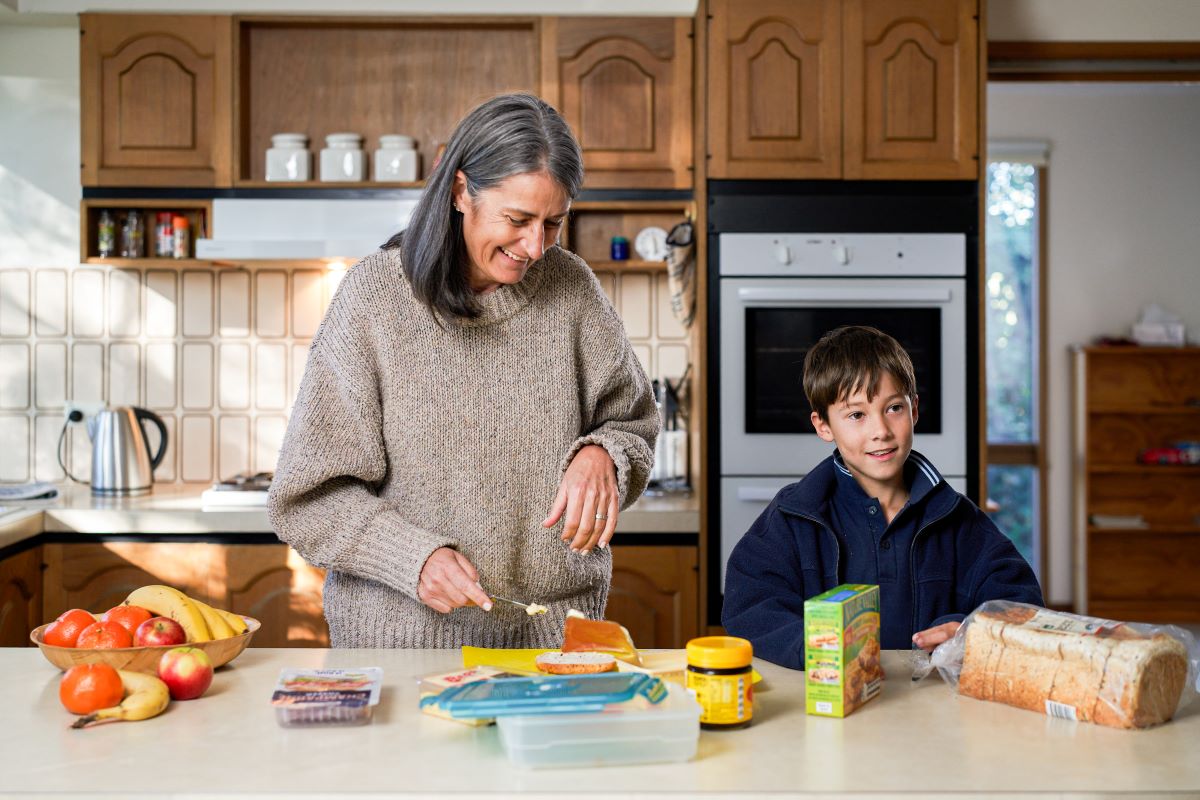
Vulnerable children and families are the focus of an advocacy campaign by Uniting Vic.Tas ahead of November’s state election.
By Erin Craven
Uniting Vic.Tas’ priorities ahead of the Victorian election include initiatives that support vulnerable children and families and reduce demand on child protection agencies and youth justice systems.
As a contemporary expression of the Uniting Church’s commitment to social justice and community care, Uniting Vic.Tas actively participates in influencing community and policy conversations, working with government and other organisations in the community services sector to support people in need in the community. The experience of the people Uniting Vic.Tas works with, its relationships within the wider sector (including the UnitingCare Australia network) and its knowledge of public policy inform its advocacy work.
The Uniting Vic.Tas Victorian election platform ‘Earlier Support for Stronger Families’ calls for an investment in proven intervention supports, particularly in regional Victoria, where access to services is low and demand is increasingly high.
Uniting Vic.Tas has seen and heard first-hand from staff and consumers about the challenges people living in regional Victoria face in accessing support, along with the increasing complexity of support needed by those accessing its services.
Families and individuals are being pushed closer to crisis because the systems designed to support them are increasingly unable to respond. Meanwhile, government agencies face growing demand across homelessness, health, child protection and justice.
Together, a number of initiatives can create a continuum of support, from prevention and early intervention through to intensive family support, treatment and reduced demand on crisis services.
Establish family wellbeing connections
Families often say that the hardest part of accessing support is knowing where to start.
Uniting Vic.Tas is calling for dedicated family wellbeing connectors to be placed in its 103 early learning programs across 62 Victoria communities. These highly skilled professionals would be expertly placed to support and identify vulnerable families before they reach crisis point and help them navigate the supports available to them.
A 2025 survey of families who accessed Uniting Vic.Tas’ integrated family services showed that 51 per cent of families found that difficulty navigating services was a barrier to accessing support.
The ‘Uniting Families Report 2025: It takes a village to raise a child’, developed in partnership with Uniting NSW/ACT, Uniting Vic.Tas, and Uniting SA, also highlights the importance of providing connectors to care where families gather.
Connecting families with support earlier can strengthen family wellbeing and reduce the likelihood of later crisis intervention.

Kinship carers provide love and stability to children in their care.
Provide a Victorian kinship guarantee
Across Victoria, 82 per cent of children and young people in out-of-home care live with relatives or family friends rather than foster carers.
These kinship carers step in to provide care, love and stability, often with little notice and with significant personal and financial sacrifice.
Despite the vital role they play, Victorian carers currently receive significantly less financial support compared with carers in other states and territories, with many forced to use personal savings or income to meet children’s needs.
Kinship carers also have access to less therapeutic and practical support than foster carers, even though many of the children they care for have experienced similar levels of trauma and disadvantage.
Kinship care is also the preferred model for First Nations children and young people who are placed in out-of-home care. Eighty-two per cent of Aboriginal children who are placed in out-of-home care are placed in kith or kin arrangements. As part of Uniting Vic.Tas’ election ask, it has engaged with the Victorian Aboriginal Child and Community Agency (VACCA) and called for an investment in an Aboriginal model of kinship care as part of this ask. This kinship model would ensure safe, culturally connected out-of-home care.
A Victorian kinship guarantee would provide kinship families with the financial security and integrated support they need from day one, creating a fairer and more sustainable out-of-home care system in which every Victorian child has the support they need to thrive, regardless of whether they are placed with kith and kin or foster carers.
Roll out Meals for Change program
Victoria is facing growing levels of youth loneliness, social isolation and social disconnection, with young people in regional Victoria particularly at risk.
For more than a decade, Uniting Vic.Tas’ Meals for Change program has provided young people in Ballarat experiencing, or at risk of, social isolation, disengagement, homelessness and other forms of disadvantage, social connection and belonging by partnering with local cafés and restaurants to provide affordable meals in a community setting.
By rolling out the ‘Meals for Change’ program across other areas of regional Victoria, including Wimmera and Gippsland, more young people will have the opportunity to build better connections and access support before problems become entrenched.

Expanding the Catalyst rehabilitation program into regional Victoria would address significant treatment gaps and ensure that regional Victorians can access support close to home.
Government investment in Ruby’s Reunification Program
Family conflict is one of the leading causes of youth homelessness.
In Ballarat, one-fifth of young people presenting for homelessness support report experiencing family-related issues.
Ruby’s Reunification Program offers an innovative response for young people aged 12-17 at risk of homelessness due to conflict at home. The program provides a safe, short-term place to stay, alternating between short-term accommodation and remaining at home, when it’s safe to do so, creating a circuit breaker from conflict while maintaining family connection.
Through whole-of-family therapeutic support, Ruby’s also helps to address the underlying causes of conflict and works towards family reunification.
The program has already been successfully run in South Australia for 25 years, by Uniting Communities (part of the UnitingCare Network). Uniting Vic.Tas is proud to have been able to bring Ruby’s to Victoria with funding through the Kilmany Trust, and is asking for State Government investment to secure future operations.
Expand Catalyst rehabilitation into regional Victoria
Many regional communities experience disproportionately high levels of alcohol and drug-related harm, yet access to treatment remains limited.
For the past 15 years, the Uniting Vic.Tas Catalyst program has supported more than 3000 people in metropolitan Melbourne to make positive and lasting changes to their substance use. The program’s non-residential model allows participants to continue to care for family members, maintain employment and remain connected to their communities they are while receiving treatment.
The program has also run in Hobart, in partnership with Hobart North Uniting Church. It has also won the Organisation/Program Award for Excellence from the Alcohol, Tobacco and Other Drugs Council Tasmania.
Expanding Catalyst into regional Victoria would address significant treatment gaps and ensure that regional Victorians can access support close to home.
Families shouldn’t have to reach crisis point before being offered meaningful support. Intervening earlier to strengthen families will help prevent children from entering out-of-home care and youth justice systems, delivering better outcomes for children and savings for government.
These five election requests provide a watershed moment for the next government. Supporting people earlier leads to better outcomes for individuals, families and communities.
As an organisation, Uniting Vic.Tas remains committed to reducing the impact of poverty, trauma and disadvantage. It does this in response to the call to stand in solidarity with the marginalised and to participate in God’s restorative work in this time and in this place. Uniting Vic.Tas’ advocacy reflects its identity as a contemporary expression of the Uniting Church.
Access the full election platform here
