
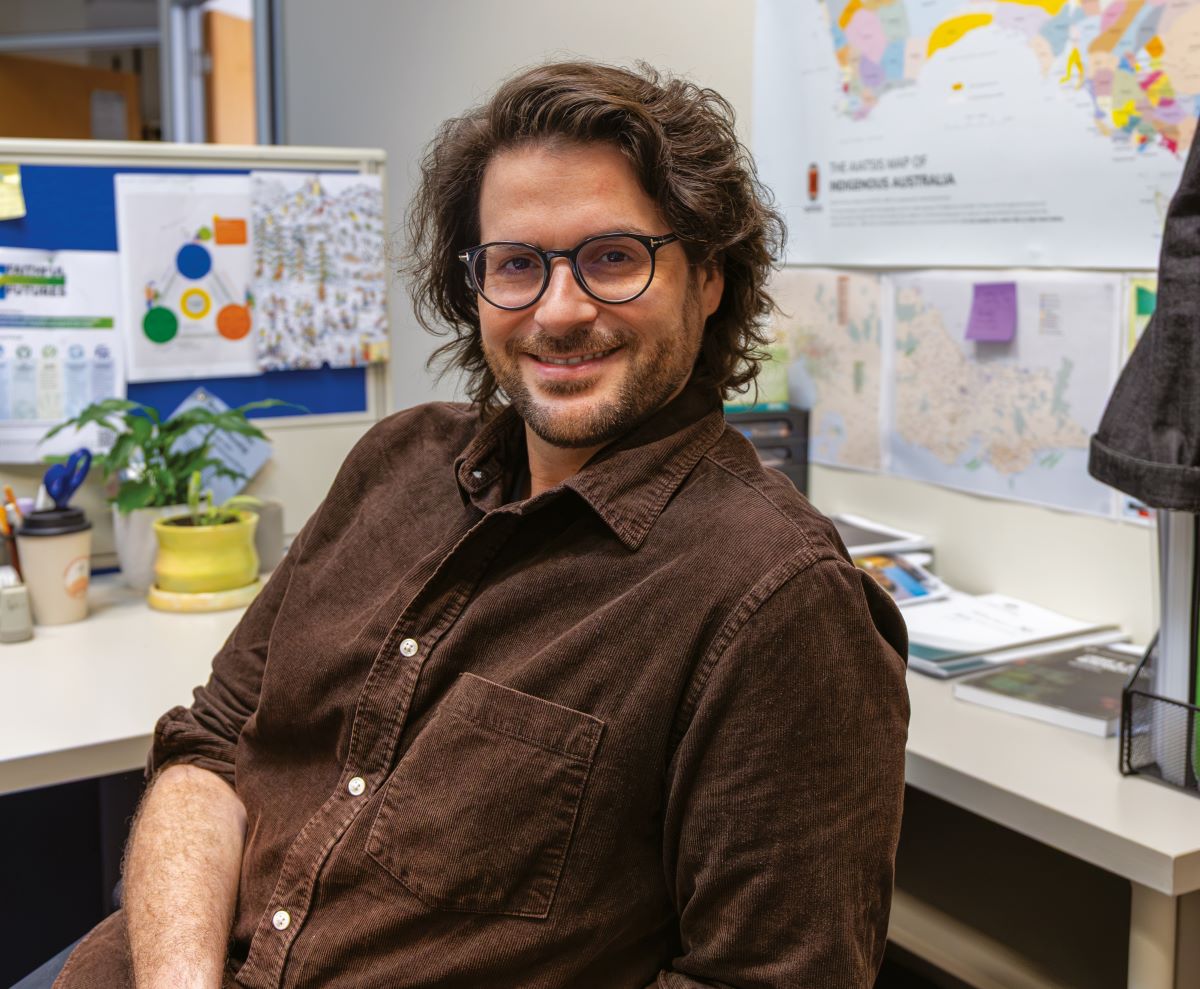
“Social justice is … to do whatever acts of kindness we can for each other where we have the capacity to do so,” says Tim Molineux.
What has been your journey with, and connection to, the Uniting Church?
I wasn’t born into the Uniting Church. Indirectly, my first connection would be through youth group in Port Augusta, the remote town in South Australia where I grew up. Youth group was an ecumenical affair, and I remember running around the Aboriginal Christian Congress as a nupirti yakarti (‘naughty child’ in Adnyamathanha). Years later, in my mid-20s, through an unusual connection to Lincoln College in Adelaide, I serendipitously joined a UAICC-led Easter pilgrimage to Oodnadatta. From having no real connection to the Uniting Church, on that trip I learned deeply about the Church and Covenanting through Deidre Palmer, who was Moderator at the time. Within a couple of months, I became Deidre’s personal assistant at the SA Synod’s Secretariat.
What makes the Uniting Church so special?
Our communities, our Covenanting, and our heresy (bear with me).
It’s our communities and not our Synod, presbyteries or buildings that hold the beating heart of inclusivity and multiculturalism. Covenanting and the UAICC are unique to the Uniting Church and built on over 40 years of practice. I say heresy to be unnecessarily contentious, however other denominations may agree with the sentiment. The Uniting Church holds apostolic succession through living witness, and not (primarily) a bloke in a frock. Our ecclesiology of not having bishops speaks directly to the importance of community holding the Spirit rather than anointed individuals set above us. This theology also informs our special understanding of how God revealed God’s self in Australia before colonisation.
What does your role as Social Justice Officer entail?
Beginning in 2019 when I moved to Melbourne, the Social Justice Officer role was originally a support role for two full-time JIM Cluster staff. However, over the next seven years my prior knowledge and experience of Covenanting have been increasingly relied upon by the Church. While the ‘JustACT’ bimonthly newsletter and accompanying resources are a core part of the role, Crosslight’s readers may also be familiar with my other work like the ‘Statement from the Heart Study Guide’ or ‘Covenanting Pathways Toolkit’. Committees play a much bigger part these days, the most recent being my appointment this year to the UAICC Victorian Regional Committee where I’m also its secretary.
Why do you think the role is so important within the UC?
I’m deeply grateful to be working with Dr Mark Zirnsak to do the work we need to on behalf of the Synod and to resource members in Victoria and Tasmania.
Perhaps more based on who I am rather than the role itself, I’m fortunate to have the unique experience of walking faithfully alongside truly remarkable UAICC leaders and members for over 12 years now, and to bring what gifts I’ve been given to serve UAICC’s vision to reconstitute itself in Victoria and be part of that revival.
What are the social justice issues that should be at the forefront for UC members?
‘The’ social justice issue is always going to be choosing to do whatever acts of kindness we can for each other where we have the capacity to do so, and to build relationships and community based upon this foundation. Given the polarisation of society, the growing inequality between those who have wealth and those who don’t, and the political access wealth permits to influence our democracy, we need to remember that we’re stronger together. The Church is one of the last egalitarian places where people from all walks of life gather to form a community. Crossing pews to know your neighbours is just as important as crossing the political divide, however, we benefit from a common faith and traditions to help us hold the tension, and each other, more gently.
But, for the sake of not missing a tag line: modern slavery in supply chains, global peacebuilding, and strengthening democratic participation and institutions.

Comments are closed.