
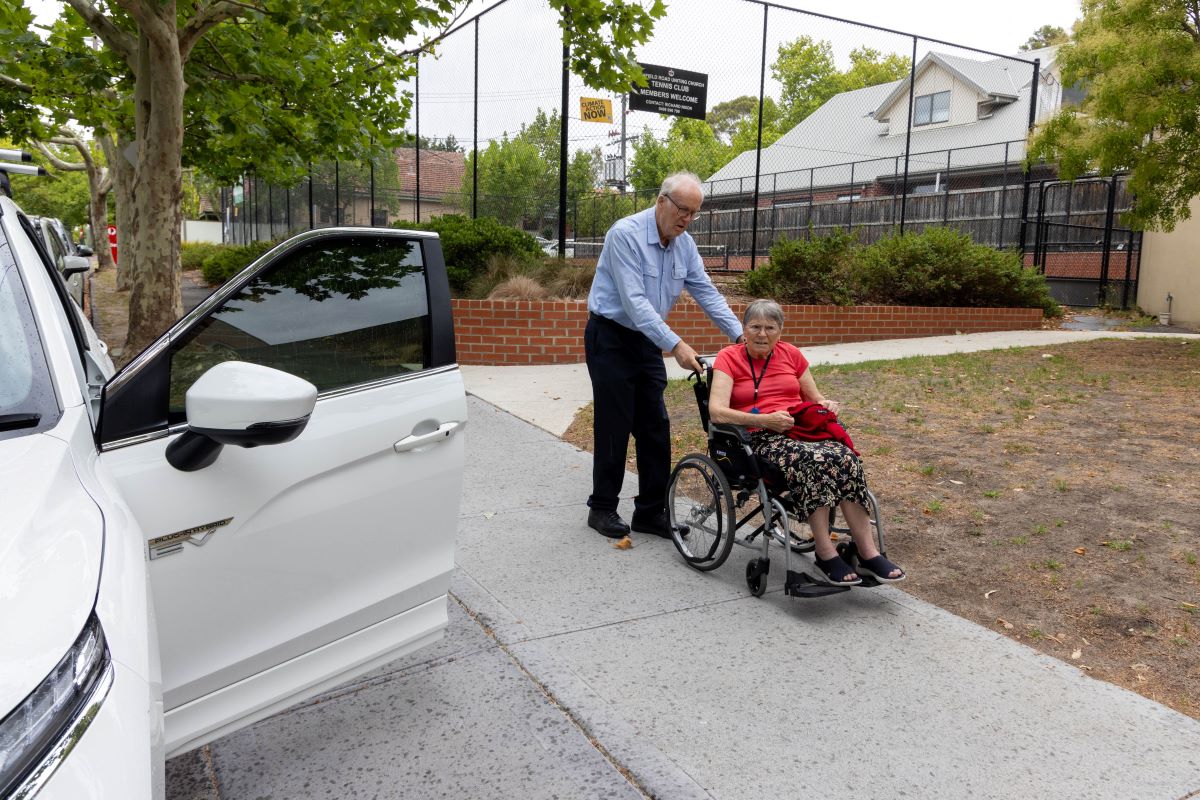
Highfield Road Uniting Church has a number of features in place to make access easier for Jill Mills, pictured with her husband Marshall.
By Andrew Humphries
From worship services suited to neurodivergent people to social gatherings for those with intellectual disabilities, Victorian and Tasmanian congregations are answering the call to improve disability access.
With one in five Australians living with disability, every congregation is almost certainly home to people navigating obstacles others may not notice, says the Synod’s Disability Inclusion Advocate Elga Rodriguez.
Those people’s needs must be catered for, says Elga.
“Full participation in worship, community and ministry is not a privilege, it is a right,” she says.
“The Church is called to welcome every person, regardless of physical, sensory, cognitive, psychosocial and other access needs.
“When barriers prevent someone from taking part, we lose their gifts, their voice and their presence, and we overlook the human diversity that strengthens the Body of Christ.”
At Murrumbeena Uniting Church, minister Rev Andreana Reale says congregation members continue to promote ways in which people with a disability can feel an important part of the congregation.
“In our congregation we have quite a few children, as well as a lot of neurodivergent people, so I try to design worship services that are as inclusive as possible for people with different needs,” she says.
“For example, a lot of people struggle with long, wordy liturgies and sermons, so we focus on story-telling and lots of dynamic movement and drama.
“We also use tactile ways of praying and engaging with ideas.”
Andreana says her own experience as a mother to a six-year-old child who is neurodivergent is helpful.
“I need to design things so that he’s happy to be in church,” she says.
“Currently we are working on having a number of adults he feels safe and comfortable around, which means he’s less likely, for example, to do dangerous things with the candles while I’m preaching, or run laps of the pulpit.
“Having a neurodivergent-friendly worship service is a matter of survival for me.”
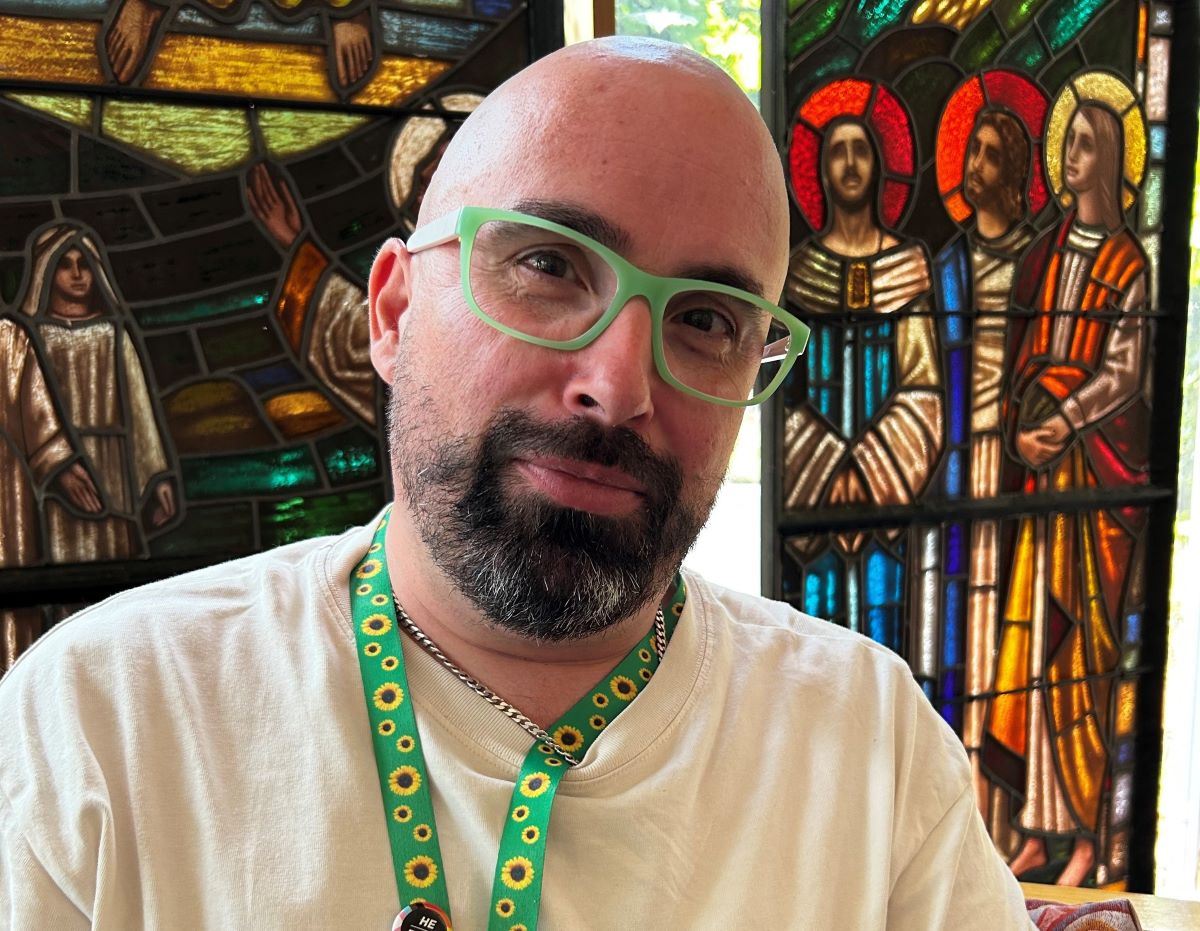
Church Council member David Crothers was able to attend the ‘Belonging by Design’ neurodiversity conference last year thanks to funding from his Murrumbeena Uniting Church congregation.
Andreana says the free Android app called Google Live Transcribe is particularly useful during sermons.
“It uses AI to transcribe the voice of anyone speaking and we have started setting it up for a woman who is hard of hearing,” she says.
Church Council member David Crothers is autistic and the congregation paid for him to attend the neurodiversity conference ‘Belonging by Design’ last year.
“I think there is more we can do, and I’m really glad David attended that conference, so we can keep making changes to make church as inclusive a place as possible,” Andreana says.
At Launceston North Uniting Church, Crossroads group members celebrated its 32nd birthday in October last year.
With the assistance of congregation members, Crossroads has been able to provide an ongoing social setting for people with a disability.
Launceston North minister Rev Caro Field says it’s a privilege to be involved with the group.
“They are a bunch of wonderful human beings, who are kind, affectionate, hilarious and thoughtful in their own ways,” she says.
“Many of our members have intellectual disabilities, more so than physical, but it’s a bit of a mix.
“I also find that I receive just as much from them as I give, in terms of love, support and spiritual guidance.
“Having the Crossroads group as part of our ministry at Launceston North has helped me as a minister, and a human being, to be more aware of what life is like for people with disabilities, and that they need to be seen, to be respected and loved … just like anyone else.
“It’s been a significant journey for me to learn from them how to respectfully support them, without falling into the trap of being inadvertently ableist.”
Caro says that recent changes in the disability sector mean that Crossroads may not continue after this year.
“When Crossroads first started, there were few, if any, social activities available for people with disabilities to get involved with outside of their group homes and formal care environments, so Crossroads filled a gap and met a need,” Caro says.
“But now, with the flexibility and variety that has been introduced through the NDIS, where clients are able to use their NDIS funds for a variety of approved activities, the need for the things that Crossroads provides has kind of diminished.”
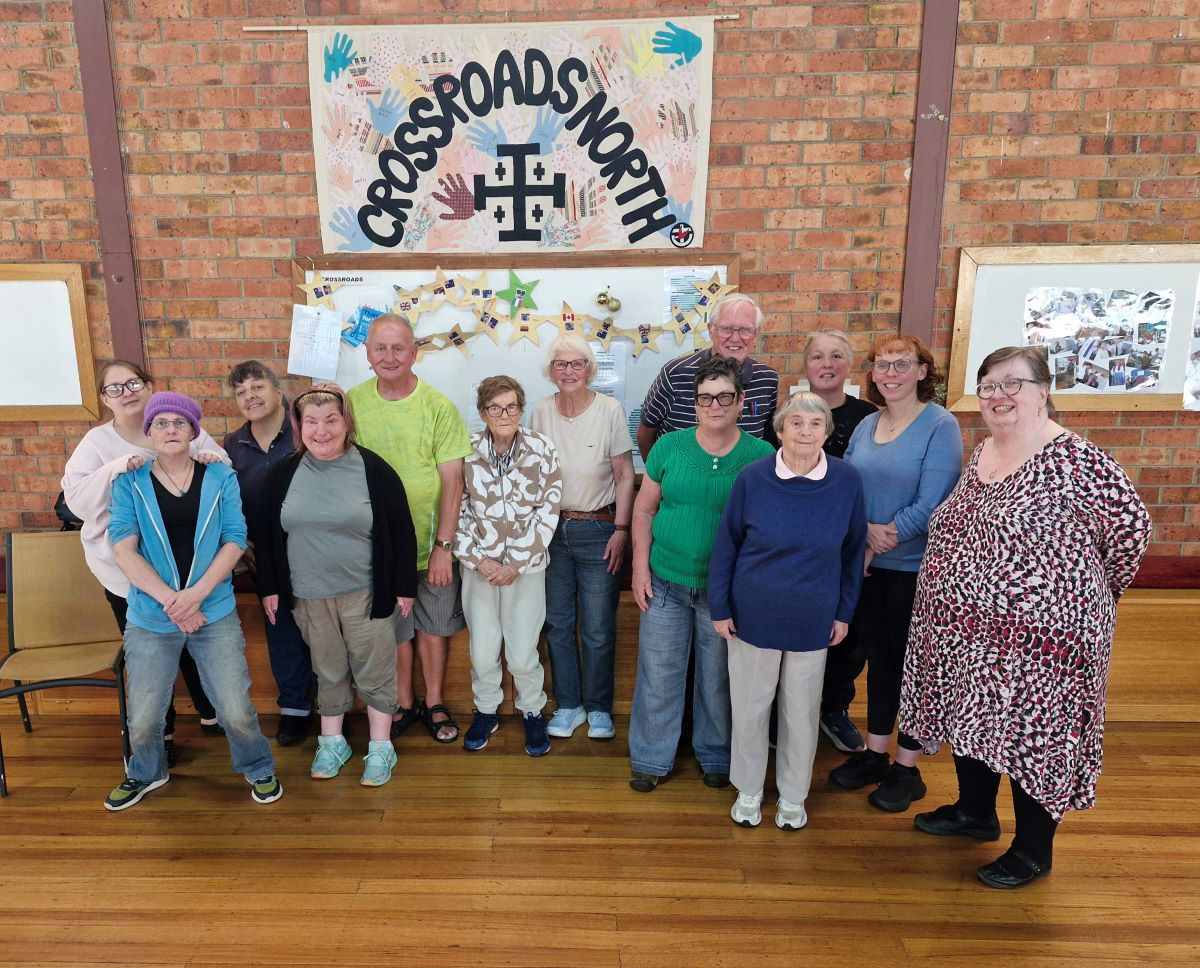
Launceston North Uniting Church has shared a wonderful association with the Crossroads group for over 30 years.
At Highfied Road Uniting Church, the congregation is committed to providing suitable access in a variety of ways for people with a disability, says minister Rev Dr Christopher Page.
“Access is the ability to come into God’s presence through contact with our faith community, the local community and the opportunity for outreach,” Christopher says.
“While physical access varies widely between congregations, there are several themes that consistently show up.”
Christopher says the congregation has prioritised entry ramps, a disabled parking space, accessible toilet, and a mobility‑friendly layout inside the building.
“This was challenging with an older building and council building regulations, but, after a disability audit, congregational consultation, planning and fulfillment of council regulations, construction was completed in about two years,” he says.
“We have an open‑door policy and our building is used extensively for community activities, special events and, of course, congregational gatherings.”
Christopher says offering access beyond just worship provides all people with mobility issues the opportunity to meet and greet friends and other members of the community.
“Research shows that people involved in face-to-face communities tend to experience higher social cohesion, civic engagement and wellbeing, compared with the general population,” he says.
“Friendship groups, morning teas and worship experiences can be especially valuable for people who are isolated or living with disability, and access to our building and community supports quality of life, independence and emotional wellbeing.
“A simple ramp into our church building, toileting facilities and internal building layout far exceeds the physical (dimension), it gives opportunity to spiritual wellbeing.”
In Tasmania, a dream to build supported accommodation for people with a disability, through the Kingston Uniting Church, became a reality over a decade ago with the construction of Rowallan Park.
The dream was made possible with funding from the Federal Government’s Supported Accommodation Innovation Fund, enabling construction of four spacious single-bedroom independent units, two two-bedroom units and ‘The Big House’, which consists of four huge bedrooms, a couple of living rooms, a bath, and overnight sleeping accommodation for staff.
Across the driveway is the community centre incorporating a large flexible worship space, huge foyer area, commercial-grade kitchen with disability-access benches, meeting room, offices and a large hall.
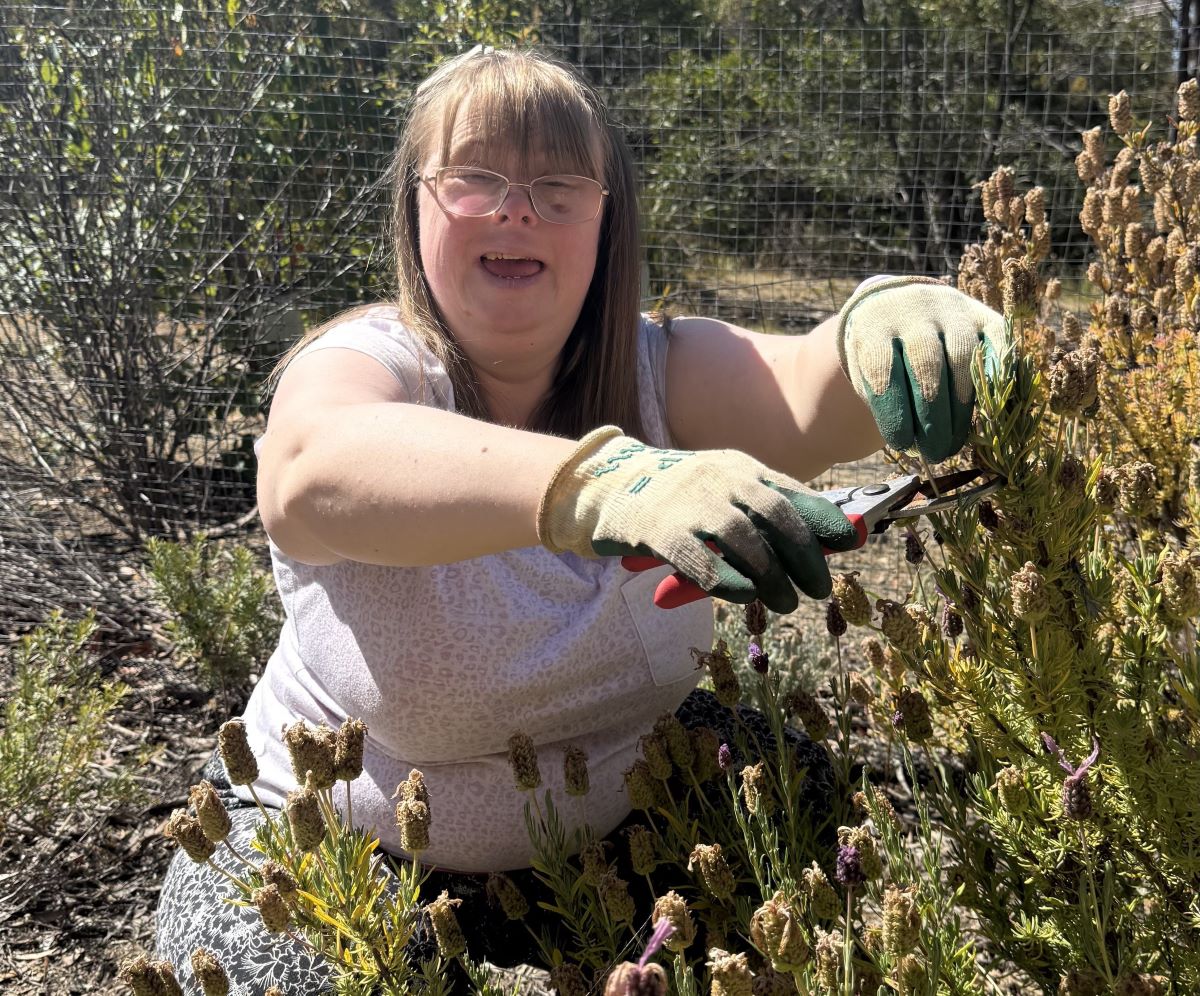
Elise Romaszko enjoys time in the garden at Rowallan Park in Tasmania.
Minister Rev Michael Duke is incredibly proud about what the community has been able to create at Rowallan Park.
“Intentional Community has been the primary calling of Kingston Uniting Church/Rowallan Park for so long it has become imbedded in our DNA,” Michael says.
“We have learned that accessibility goes far beyond ramps and rails. Last year, KUC/RP launched a neurodiverse-focused youth group with an intentional awareness around how we furnish and light our spaces, some to facilitate activity, and others to provide calm to help our participants regulate if needed.
“KUC/RP also runs a monthly Red Dove Café where we provide free barista coffee and cake, opening up the café experience to members of our community who survive on pensions or minimum wages.
“Our splendid neighbours from the supported accommodation are crucial to making it all happen, providing much appreciated muscle and help to clean it all up.
“Each year we are treated to a Tenebrae service where readings are brought to us by people who live with Down syndrome, autism and acquired brain injury.
“The joy of providing service is a lesson many able people in our society could really learn from our splendid people who live with a disability.”
Elga says congregations can provide disability access in a number of ways, often at little cost.
“Meaningful change does not have to be costly,” she says.
“Congregations can begin by asking people with disability what would help them participate more fully.
“Practical steps include providing large print materials, ensuring accessible pathways, car parks and bathrooms, using microphones consistently, and offering quiet spaces for those with sensory sensitivities.
“Sharing information in multiple formats including text, audio, video and images, and using plain, inclusive language also makes a real difference.”
Elga says people with a disability can offer much in the way of leadership within congregations.
“Leadership and culture matter just as much as buildings, and (congregations can) include people with disability in decision‑making roles, train volunteers to engage respectfully and regularly review programs to identify where people may be unintentionally excluded.
“Access begins with attitude, and belonging begins with being genuinely seen.”
Congregations wanting further assistance around disability access can email Elga at elga.rodriguez@victas.uca.org.au

Comments are closed.