
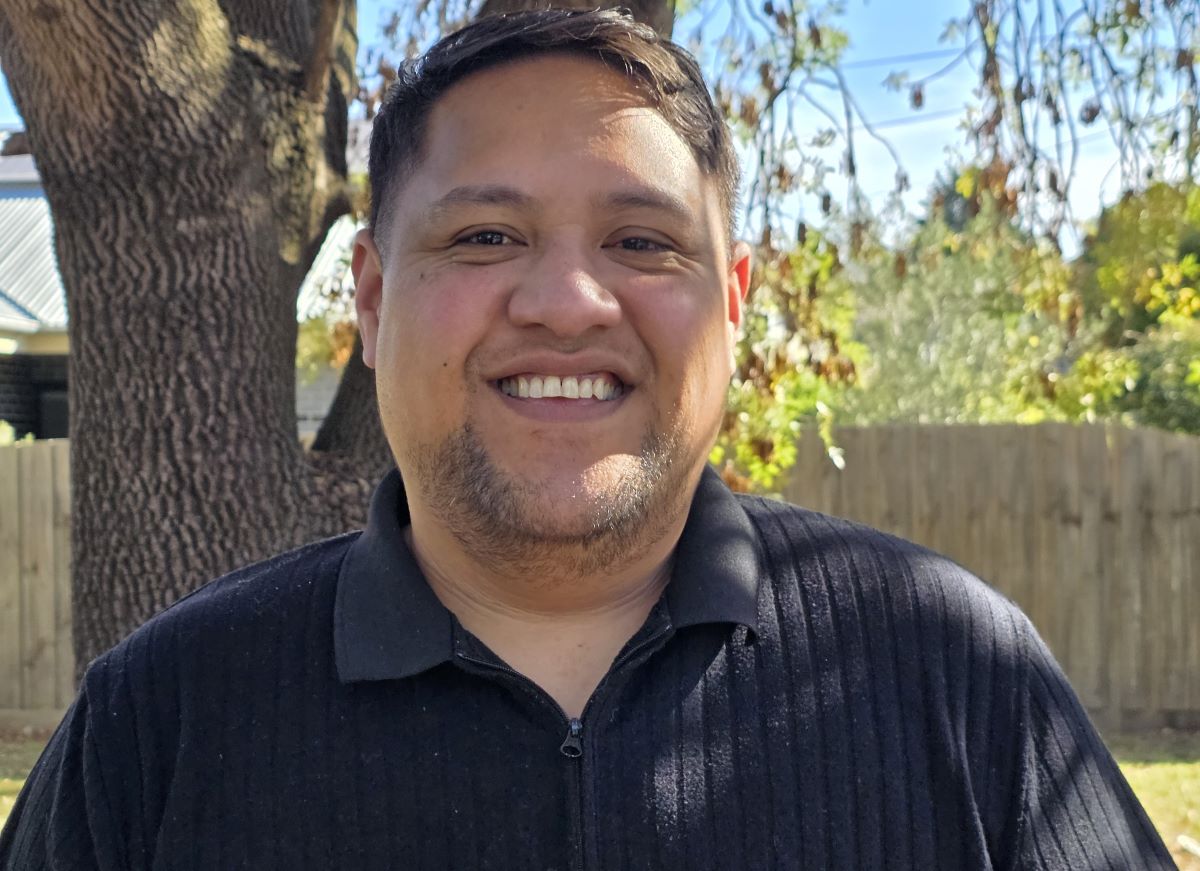
Recent attendance at the Asian Ecumenical Youth Assembly in Thailand has expanded Sione Hehepoto’s understanding of faith.
By Marina Williams
When Sione Hehepoto returned from the Christian Conference of Asia’s Asian Ecumenical Youth Assembly (AEYA) in Chiang Mai, Thailand, he brought back more than memories of the five-day gathering.
From April 17–21, the assembly drew together young Christian leaders from across the Asia Pacific, expanding Sione’s understanding of faith and reshaping his sense of what ministry might require.
“Unity, I learned, is not about uniformity or ‘oneness’, but about togetherness,” he says.
Born and raised in Ivanhoe in Melbourne, Sione is of Tongan heritage and grew up in a family where church life was central. His parents were deeply involved in Canterbury Balwyn Uniting Church, with his early years structured around Sunday services, Bible studies and small groups.
“Much of my faith has been shaped by my parents and the community around me,” says Sione, who is in his final year of formation in the Synod of Victoria and Tasmania.
“Growing up, my sister and I were usually ‘dragged along’ and immersed in church life, whether we fully understood it or not,” he says.
His understanding of faith shifted significantly as a teenager.
At 17, during a youth Bible study, a passage from Ephesians 2:8-9 reframed his thinking.
“It meant that God had freely given me salvation – grace is a gift,” Sione says, “and I was called to live with grace and thanksgiving.”
But that moment did not immediately translate into a clear vocational path.
“In many ways, I did not pursue ministry – God pursued me,” he says.
At 18, Sione stepped into youth leadership and found a deep sense of purpose, alongside what he describes as a persistent “niggling” – a growing sense of call. Choosing to pursue ministry meant relinquishing control and stepping into unfamiliar territory.
He describes the experience as formative.
“Through encounters with diverse people and communities, I have felt exposed – yet in that vulnerability, I have found my voice,” he says.
Central to that development is a growing sense of faith as relational.
“We do not walk this life alone. We are relational beings – with one another, with creation and with God,” he says.
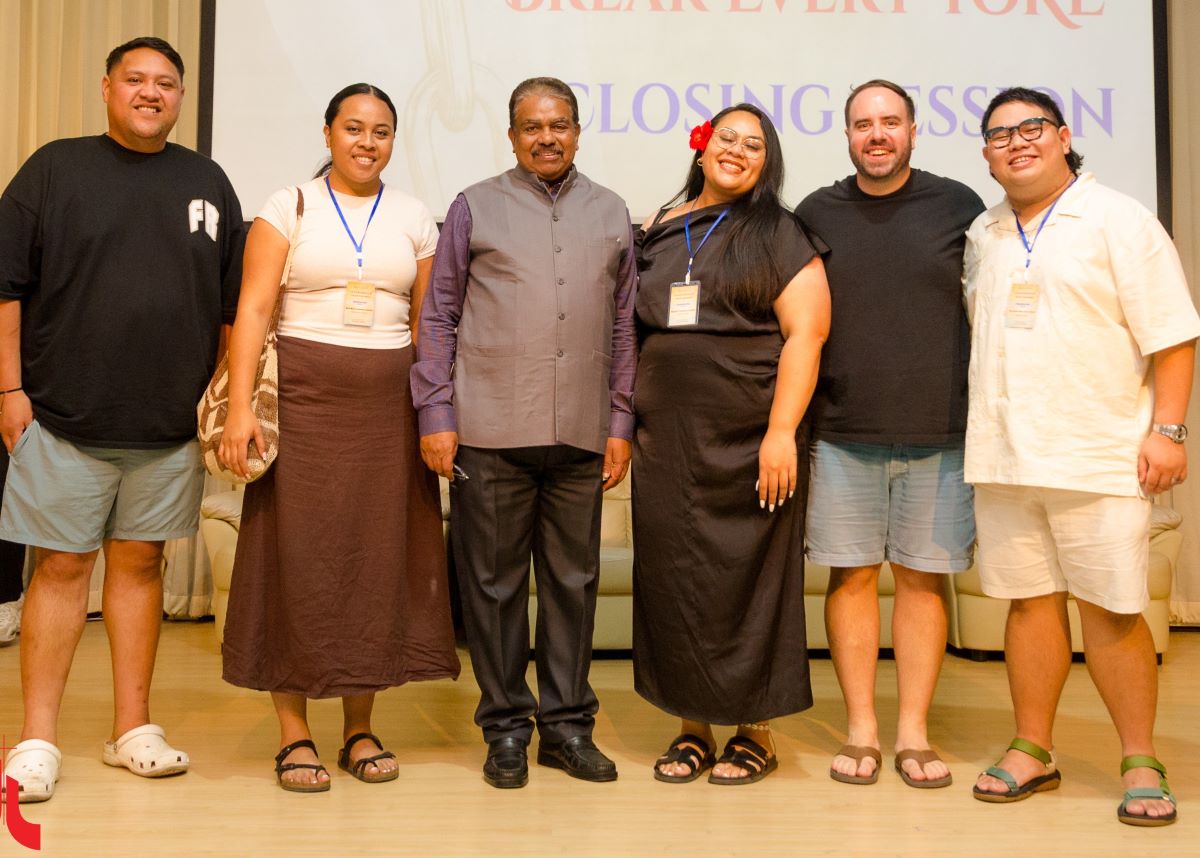
Sione was privileged and humbled to attend the Thailand gathering as a member of the Uniting Church in Australia.
Sione describes participation in AEYA as both an honour and a responsibility.
“I felt both privileged and humbled,” he says, conscious of authentically representing himself and the voice and spirit of the Uniting Church in Australia.
What stood out most during the gathering was the breadth of experiences shared. Conversations centred on economic inequality, forced migration, political repression, ecological crisis and the pressures shaping young people’s lives.
Living in Australia, he says, brings freedoms not guaranteed elsewhere – the ability to speak, worship and move without fear. For some participants, even peaceful protest carries significant risk; for others, social media is the only safe space to express dissent.
“These realities are not confined to one region,” Sione says of recognising shared concerns.
“They resonate across contexts, including my own experiences and those of young people in Tonga, the Pacific and Australia.”
One conversation that resonated was with a delegate from Indonesia, who asked how to navigate patriarchal gender roles within the family. Sione described a household where traditional expectations had been reworked – his mother the primary breadwinner, and his father, who lives with a disability, taking on caregiving responsibilities.
“Relationships are rarely equal in a strict 50–50 sense; they are like a dance – shared effort and mutual support,” he says. “Genuine love leaves no room for ego.”
Sione was also invited to lead small-group Bible studies, facilitating conversations among peers.
“The trust the Christian Conference of Asia organisers placed in me was both surprising and affirming,” he says. “As I prepared carefully, reflecting on what I could offer, it became clear that I received far more than I had given.”
More broadly, AEYA has reshaped his view of ecumenism as connection across difference, influencing how he now views the role of the Church – not only to offer care, but to stand in solidarity with those on the margins and oppose injustice.
“It calls me to be more intentional and proactive in my ministry,” he says, including how he uses his voice.
As he approaches the completion of his formation, Sione sees ministry less as something confined to particular settings and more as something lived out in everyday interactions.
“Ministry is not private, it is a public proclamation of Jesus Christ,” he says.
The experience has strengthened Sione’s commitment to listening, particularly to young people and those often overlooked, and to further ecumenical engagement.
“We are called to use our gifts, privilege and influence not for ourselves, but for others,” he says.
“The only way I know to honour those I encountered is to live faithfully, honestly, truthfully and with love in my ministry.”

Comments are closed.