
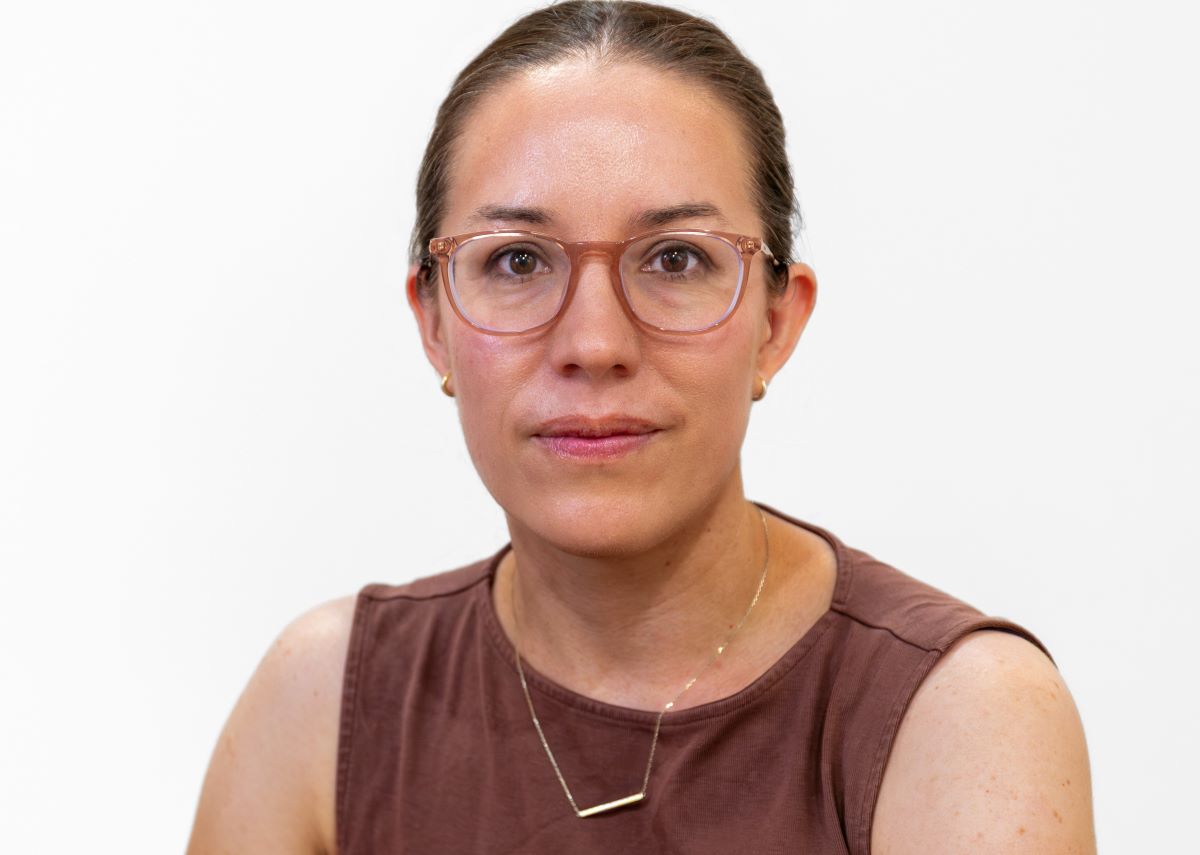
Associate Professor Laura Rademaker delivered the year’s first Northey Lecture at the Centre for Theology and Ministry in late February.
By Andrew Humphries
When Prime Minister Kevin Rudd delivered his apology to the Stolen Generations in 2008, Laura Rademaker was part way through studying an Arts degree at the Australian National University (ANU).
At the time she had no clear idea on where her studies might take her.
Eighteen years later Laura, who delivered the first Northey Lecture for 2026 in February, is a distinguished academic and prolific author, with a strong focus on Indigenous history.
None of this would have happened, she says, without Kevin Rudd’s apology to First Nations people.
It proved to be a pivotal moment in shaping what was to follow for her.
Growing up as part of an Anglican family, Laura had what she describes as a “fairly standard conservative Christian upbringing”.
She hadn’t, she says, given Indigenous issues much thought, until Kevin Rudd’s February 13, 2008 apology.
“That was when I realised the Anglican Church, which I had supported all of my life, was complicit in the removal of Indigenous children from their families,” Laura says.
“I wasn’t aware of this growing up, and it wasn’t something that was talked about, although by 2008 I knew that First Peoples were asking for an apology for what had been done to them.
“I probably wasn’t fully aware of its impact at the time, but that apology by the Prime Minister has gone on to shape so much of what I have done since.”
The apology sparked an interest in Indigenous history that saw Laura complete an honours thesis exploring the diaries of female missionaries with responsibility for caring for Indigenous children who had been taken from their families.
“It was a project which explored the motives of these missionaries and how they understood those motives themselves,” she says.
“What was so confronting was that these missionaries weren’t simply ‘horrible people’. They were ordinary white women just like me, but they were involved in enabling such an injustice.”
It meant, Laura says, a further questioning of whether what she had learned was compatible with her Anglican Church faith.
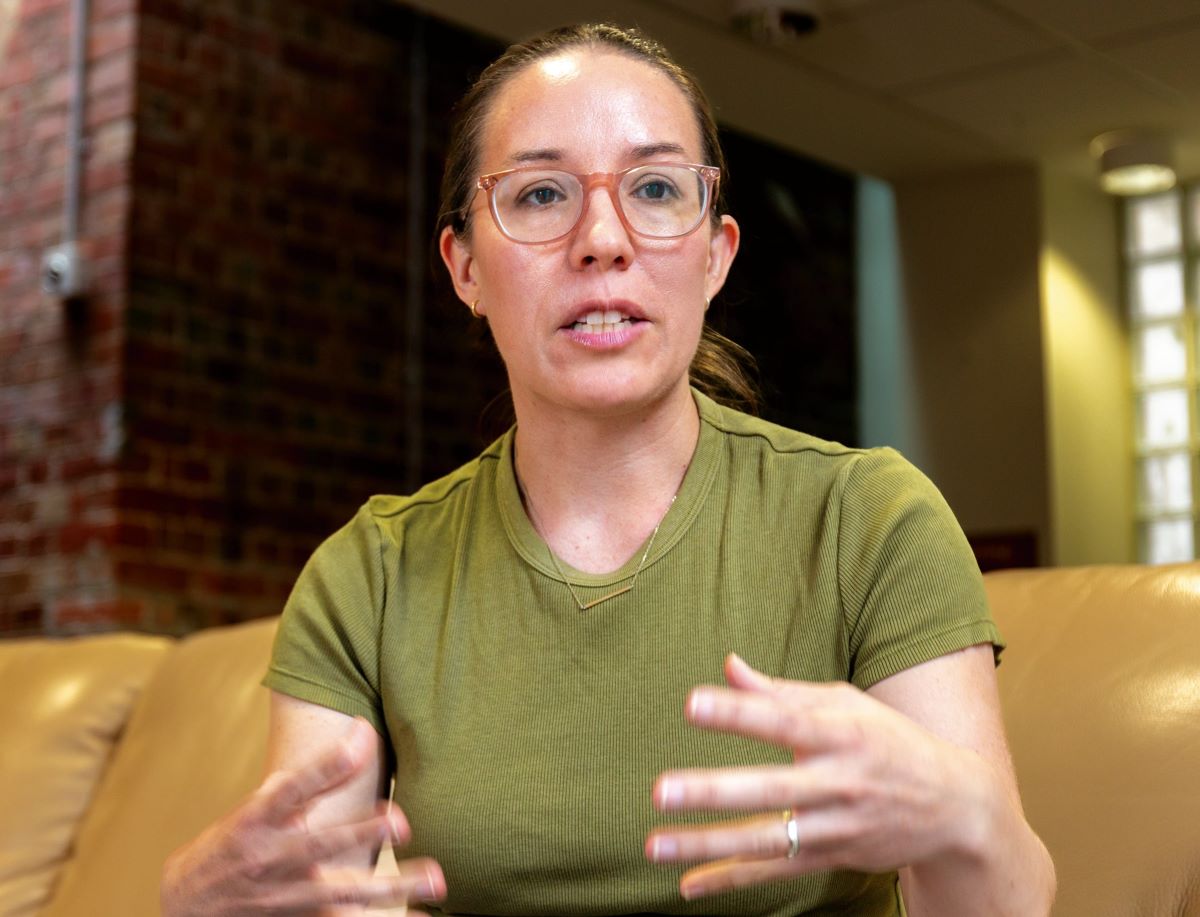
“I can ask non-indigenous Australians, especially churches, to reflect on how we might do things better in the future,” says Laura Rademaker.
“I do wonder, sometimes, how much we have learned from our history with First Nations people and how willing we are to look at it,” she says.
“I see myself as being formed by where I have come from in terms of my faith, but that’s not to say our churches don’t need to change.
“I can’t now claim to have the answers, but I can say it has become an honour and a privilege to learn from First Nations people.
“The important questions for me surround what churches have done to First Nations people and why, in the past, they haven’t listened to them.
“Most of it has involved asking myself, ‘how could things be different?’.”
Laura’s Northey Lecture at the Centre for Theology and Ministry on February 26 explored how religion, and the Bible, were used to explain and justify colonisation and the deaths of First Nations people which resulted from that.
“It was a process at the time that declared that Indigenous people had no right to their own Country, and what I have explored is how that was allowed to happen,” she says.
“I also explore the fact that there were some settlers who argued against this treatment of Indigenous people on the basis that it was unjust and unchristian.
“The fact is that there were some people who were raising the alarm about the violence carried out against First Nations people and so I want to challenge this idea that it was considered acceptable because it was a different time, and that people didn’t know any better and lived to a different standard.
“There were people (brave enough to say) that what was happening wasn’t faithful to Christian teaching.”
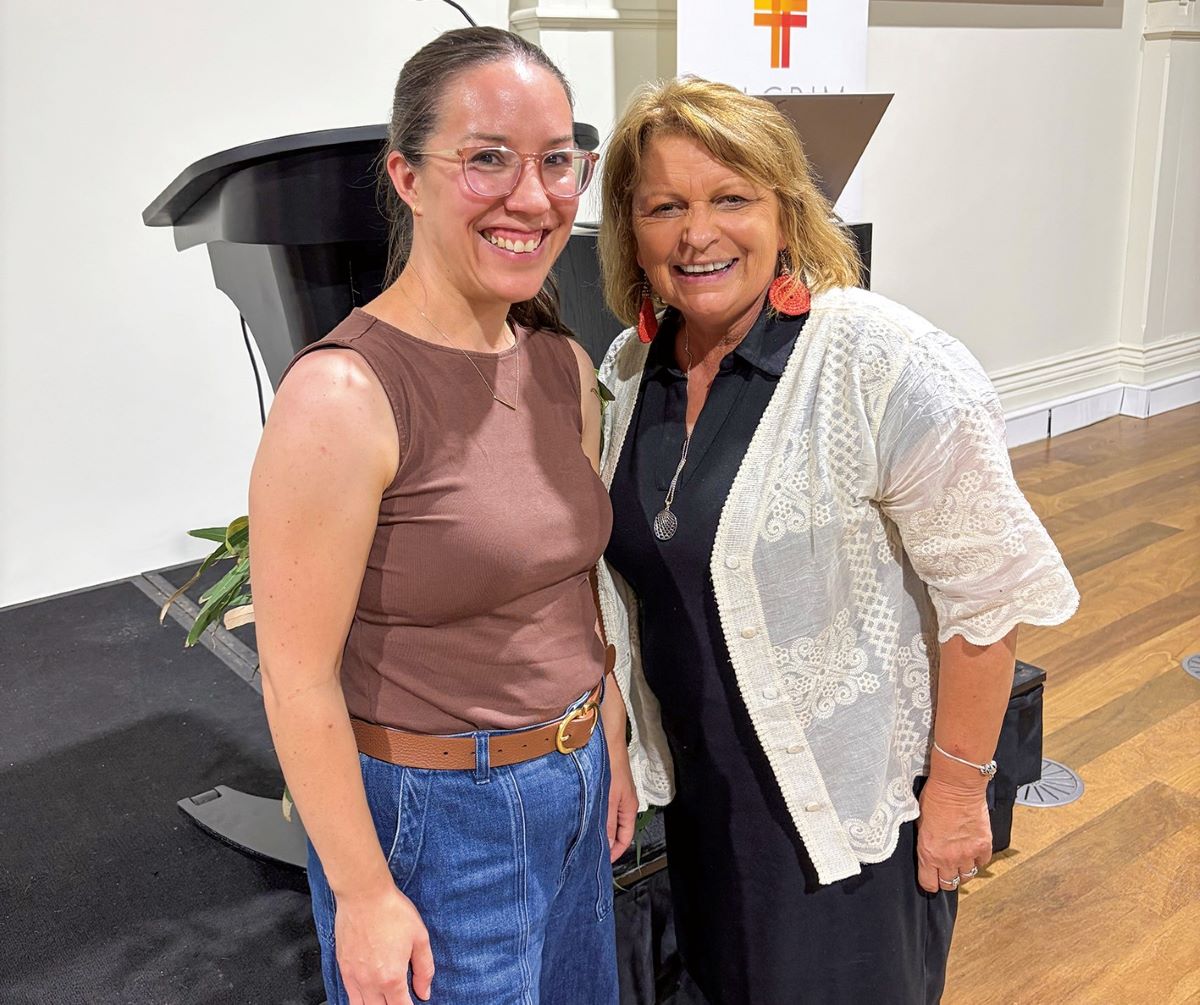
Laura Rademaker and UAICC Leprena Tasmania’s Alison Overeem at the Northey Lecture.
The hurt and trauma suffered by First Peoples since 1788 continues to cause great anguish, meaning that a concept like ‘reconciliation’, although grounded in good intentions, becomes problematic for many First Nations people, says Laura.
“I think ‘reconciliation’ has become a bit of a slippery term,” she says.
“I know that some First Nations people feel that a form of ‘reconciliation’ has been imposed on them.
“When we talk about reconciliation, though, it’s one party that needs to repent and do justice for the other.
“You can’t force forgiveness but there can’t be justice without repentance, and sometimes the language around reconciliation can tend to glide over these difficult truths.
“These ideas aren’t beyond the teaching of Christianity. We should have the spiritual resources to be able to grapple with these questions.
“The Uluru Statement was an invitation to come and walk with us, and the last few years have been heartbreaking for First Nations people because of white Australia’s rejection of that invitation.”
Laura laments the opportunity lost when a yes vote was defeated in the 2023 Voice referendum and what that result says about white Australia’s attitude towards our First Peoples.
“My heart breaks for First Nations people who extended the olive branch of the Voice and met blatant racism,” she says.
“I think it will take a long time to heal from that, and white Australians need to understand it may take a while before First Nations people want these conversations to begin again.”
Laura hopes she can continue to play a role in speaking within the church.
“I’m a non-indigenous Christian who can’t speak for Indigenous people, but I can ask non-indigenous Australians, especially churches, to reflect on how we might do things better in the future,” she says.
“I see that as a role I could fulfil.”

Comments are closed.