
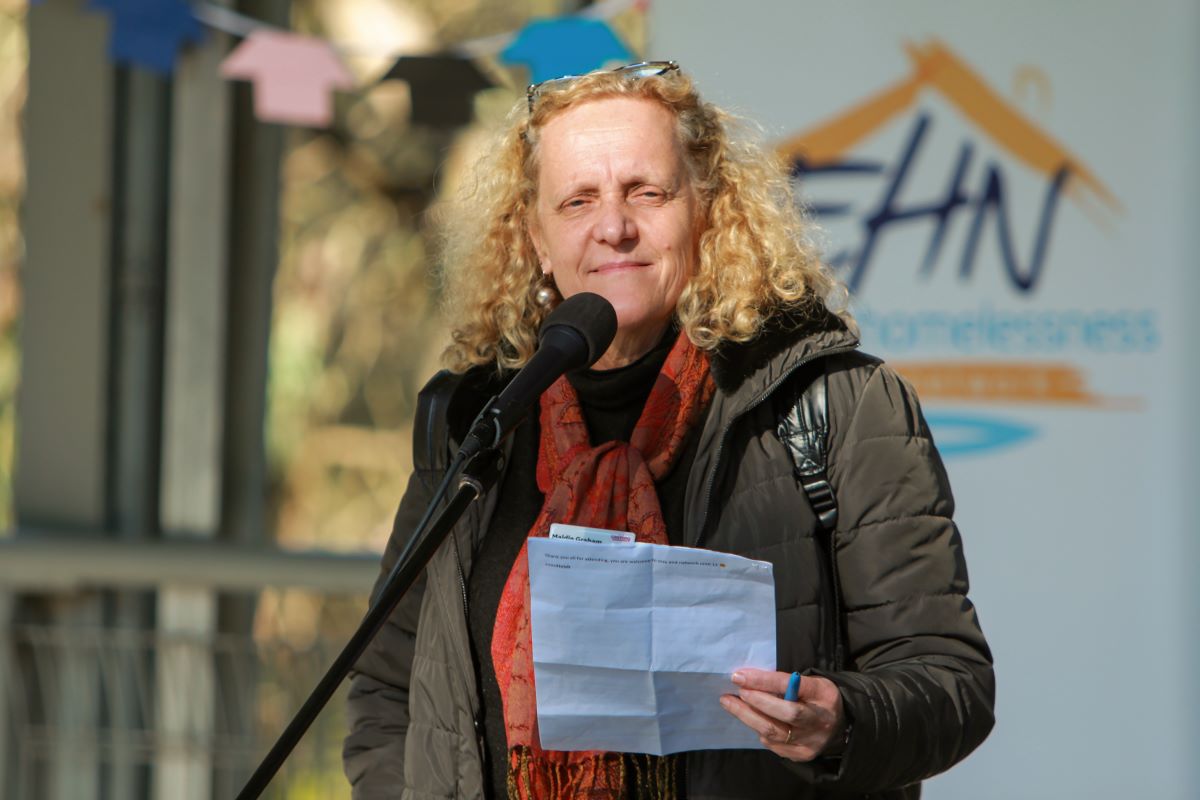
Maidie Graham from Uniting Vic.Tas is on the frontline addressing the issue of homelessness.
By Marina Williams
When winter settles in, a church hall can become more than a place of worship. For someone sleeping rough, it can mean a warm bed, a hot meal, a shower, conversation and a night without having to search for somewhere safe to sleep.
North Ringwood Uniting Church and St Andrew’s Uniting Church in Sunbury are just two congregations responding to homelessness through winter shelter, emergency relief, meals, referrals, advocacy and practical care.
For Maidie Graham, Senior Manager Homelessness Services – Intake and Prevention at Uniting Vic.Tas, congregation-led responses are compassionate and important in the moment, even as they point to a larger housing crisis.
“That direct response as a result of people’s faith is really important,” she says. “It’s fabulous that people respond in this way, but I think we have to be very focused on the need for structural change.”
Maidie says winter shelter can offer guests a proper meal, warmth, sleep, dignity and the knowledge that their belongings are safe. Some tell volunteers they have never felt so cared for, or cannot believe people are giving their time to help them.
However, Maidie says programs such as winter shelter are a caring crisis response, rather than a solution to homelessness.
“They don’t solve homelessness,” she says. “They’re a lovely band-aid, a lovely caring response.”
At North Ringwood UC, Maroondah Winter Shelter began in 2018 after local ministers from different denominations discussed how churches could respond to homelessness.
The program was influenced by Stable One, the Yarra Ranges model that has helped inspire church-based winter shelter programs in other communities.
About 10 churches are connected with the program, with seven providing venues across the week.
North Ringwood UC hosts guests each Saturday night through to Sunday morning during winter. Venue coordinators Jenny Smith and Rosemary U’Ren say the church provides sleeping accommodation, a three-course evening meal, conversation and friendship. About 60 per cent of the team comes from the congregation, working with people from other churches and the wider community.
“We have seen many guests join the program, often in a diminished state, and over the course of their stay with us, their dignity, health, self-confidence and ability to function better is significant,” Rosemary says.
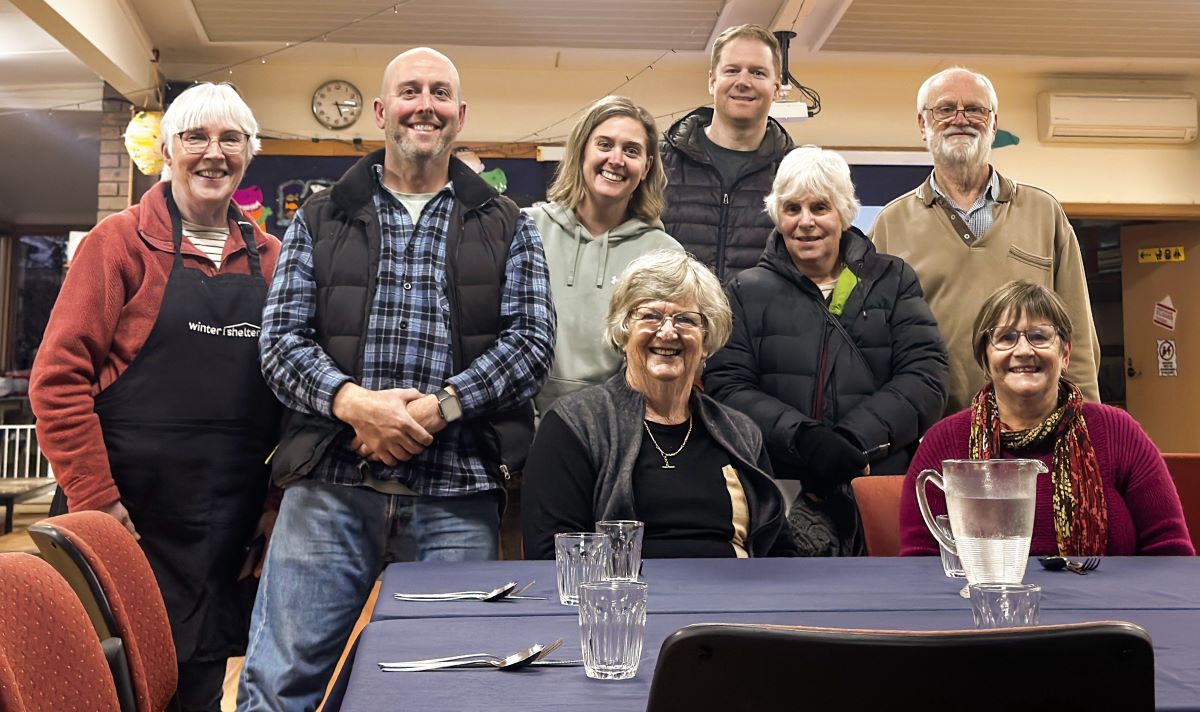
North Ringwood Uniting Church winter shelter team members (from left to right) Rosemary U’Ren, Rob Ryan, Laura Roccella, Robyn Clarke, Eric Stone, Joan Marshall, Robert Marshall and Jenny Smith.
Some guests have found employment or ongoing accommodation, while others have returned year after year, showing how winter shelter can provide care and respite without always offering a pathway out of homelessness.
Jenny says the program demonstrates that the church is “for the community not just itself”.
In Sunbury, the overnight accommodation program St Andrew’s UC helps deliver is in recess, but Sunbury Winter Shelter continues to provide broader outreach and practical support for people experiencing homelessness.
Since 2018, the congregation has been involved in local responses, including Sunbury Winter Shelter, another Stable One-inspired program run by local churches. In its full overnight format, churches provided venues and volunteers for meals, social connection, overnight support, breakfast and cleaning.
Dianne Moon, chair of the St Andrew’s Uniting Church Council and project coordinator of Sunbury Winter Shelter, says the overnight accommodation hiatus is due to a lack of access to church buildings. Under council requirements, the program can operate for only one night at one site, meaning it relies on several venues being available across the week.
Meanwhile, Sunbury Winter Shelter works alongside the Sunbury Salvation Army, attends the Sunbury Community Kitchen each Monday night and maintains contact with local police and protective services officers, who can refer people when they find someone needing assistance.
In her role with Sunbury Winter Shelter, Dianne developed an information sheet listing local services for meals, food, bill relief and accommodation support, including Vincent Care’s contact details.
Dianne says cost-of-living pressures, rent increases and relationship breakdowns are among the local factors placing people at risk.
“More families are finding themselves in need,” she says. “Some who have stable living have found increased rents have forced them to find alternatives.”
Dianne says the work remains grounded in faith and practical care.
“The Church has a mandate to care for people, spiritually and physically,” she says.
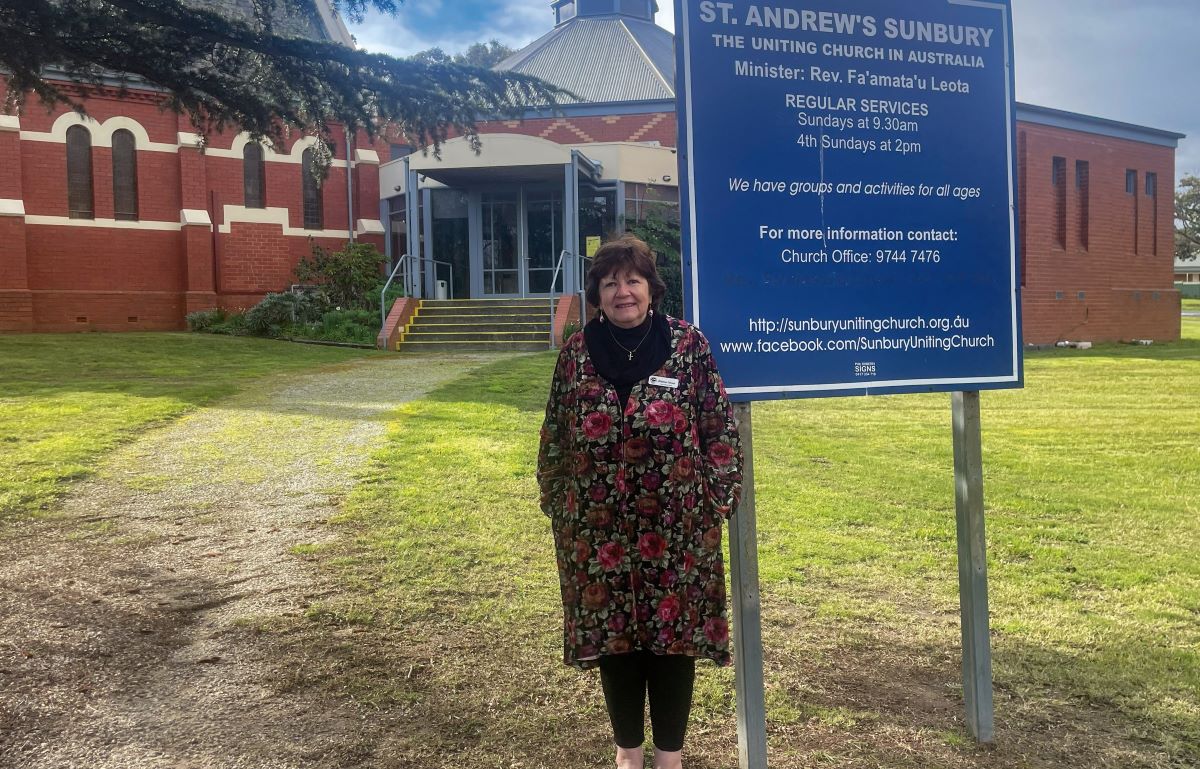
St Andrew’s Uniting Church Council chair and Sunbury Winter Shelter project coordinator Dianne Moon.
Through the years, the volunteer work has given people of different ages practical ways to serve, from volunteering and cooking meals to washing linen, listening and talking with guests.
“We are still in contact with some past guests, walking alongside them to a brighter future,” Dianne says.
After almost 30 years in the sector, Maidie says homelessness is becoming more complex and more difficult to resolve.
“They’re getting worse,” she says.
Earlier in her career, a family experiencing homelessness might move from a motel to transitional housing and then public housing. Even the crisis end of that response is under pressure, with services not having enough funding to provide motel accommodation for everyone who needs it. Today, Maidie says, transitional housing can last for years, and many people never reach long-term housing.
Services are also seeing people who have never sought help before, including private renters pushed into crisis by job loss, separation, rent increases or property sales.
The larger answers, Maidie says, lie in more social and affordable housing, adequate income support and better support for people with complex needs so housing, once found, can be sustained.
She also cautions that rough sleeping is only the visible part of homelessness. Many more people are hidden from view, sleeping in cars, couch surfing, moving between relatives and friends, or living in overcrowded or substandard housing.
“It’s not just the people sleeping rough that are homeless,” Maidie says. “There are many more as well.”
Maidie says the strongest congregation-led responses are those that move beyond hospitality alone, connecting people with specialist services and helping congregations advocate for change.
In Maroondah, volunteers’ direct experience with guests led to the establishment in 2019 of an advocacy group focused on homelessness. The group has lobbied politicians and local council departments, run forums and supported other community events related to homelessness.
The work has also changed congregations themselves. Jenny, Rosemary and Dianne say such projects have brought churches together across denominations and reminded members that homelessness can happen to anyone.
“Any one of us could be a step away from losing our housing security for many different reasons,” Jenny says.
Maidie says the challenge is to respond with compassion to the crisis in front of people, while pushing for the structural change needed to prevent homelessness in the first place.
“Those individual caring responses are really important,” she says. “But it’s always really sad at the end of the time when there’s a number of people who are still homeless and they just go back to sleeping rough again.”
