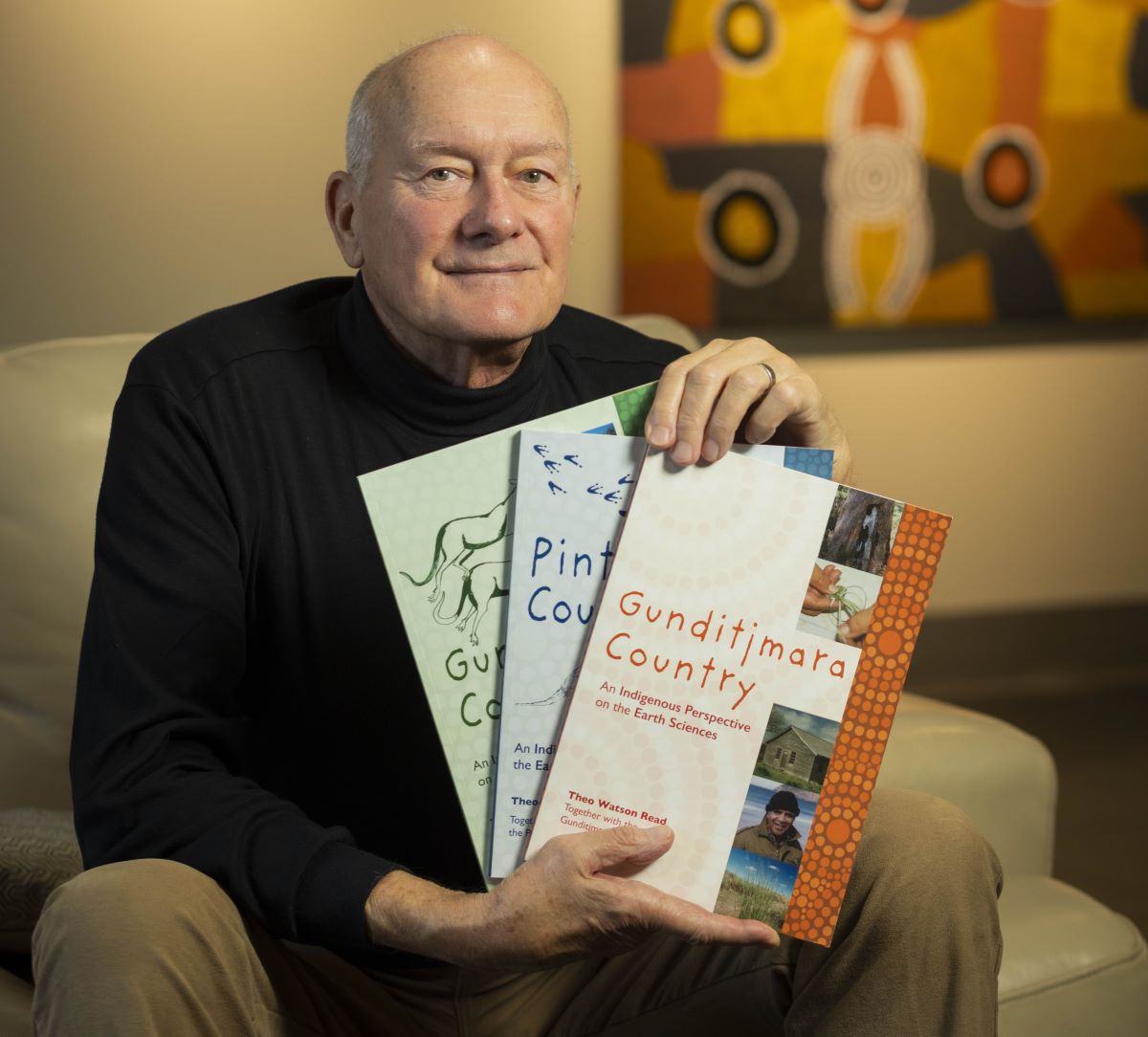
Dr Theo Read has published three Earth Science textbooks focusing on Aboriginal culture.
By Andrew Humphries
St Mark’s Uniting Church (Mornington) member Dr Theo Read fulfilled a long-time dream earlier this year with the publication of three important secondary school Earth Science textbooks.
It was a project he began almost 35 years ago and one which faced more than a few setbacks along the way.
Theo is convinced, though, that divine inspiration, when it was most needed, smoothed his path towards the project’s eventual success.
Its inception came in 1992 when Theo and his family moved to Darwin from Melbourne.
He began teaching at Kormilda College, based on a recommendation from fellow St Mark’s congregation member Dr Derek Moore, who had just returned from Darwin.
“Derek was passionate about encouraging me to take the job there and it’s the best thing I have ever done,” Theo says.
His time at Kormilda College brought him into contact with many First Nations boarding students from remote areas of the Northern Territory.
“I had absolutely no intention of teaching in a private school, let alone teaching Aboriginal kids,” Theo says.
“It was simply not on my radar, however three weeks later there I was not only teaching in a private college, but also teaching Aboriginal students from remote traditional communities.”
As he began teaching, Theo realised there was an obvious problem with the standard earth science textbooks in use at the time, particularly for First Nations students.
“Many of the students there from these remote communities had these extra layers of (Aboriginal) culture,” he recalls.
“We were using a standard general science textbook at the time, but there was nothing in it that made reference to Aboriginal culture.
“So I thought it would be fantastic to have a book that combined Aboriginal culture and Country with earth sciences.
“I turned things around by using the concept of country, hence the earth sciences, with people and culture as the framework for the textbooks, and within that were relevant bits of Western science, like geology and chemistry.”
Theo firmly believes a higher power helped him on the journey towards publication.
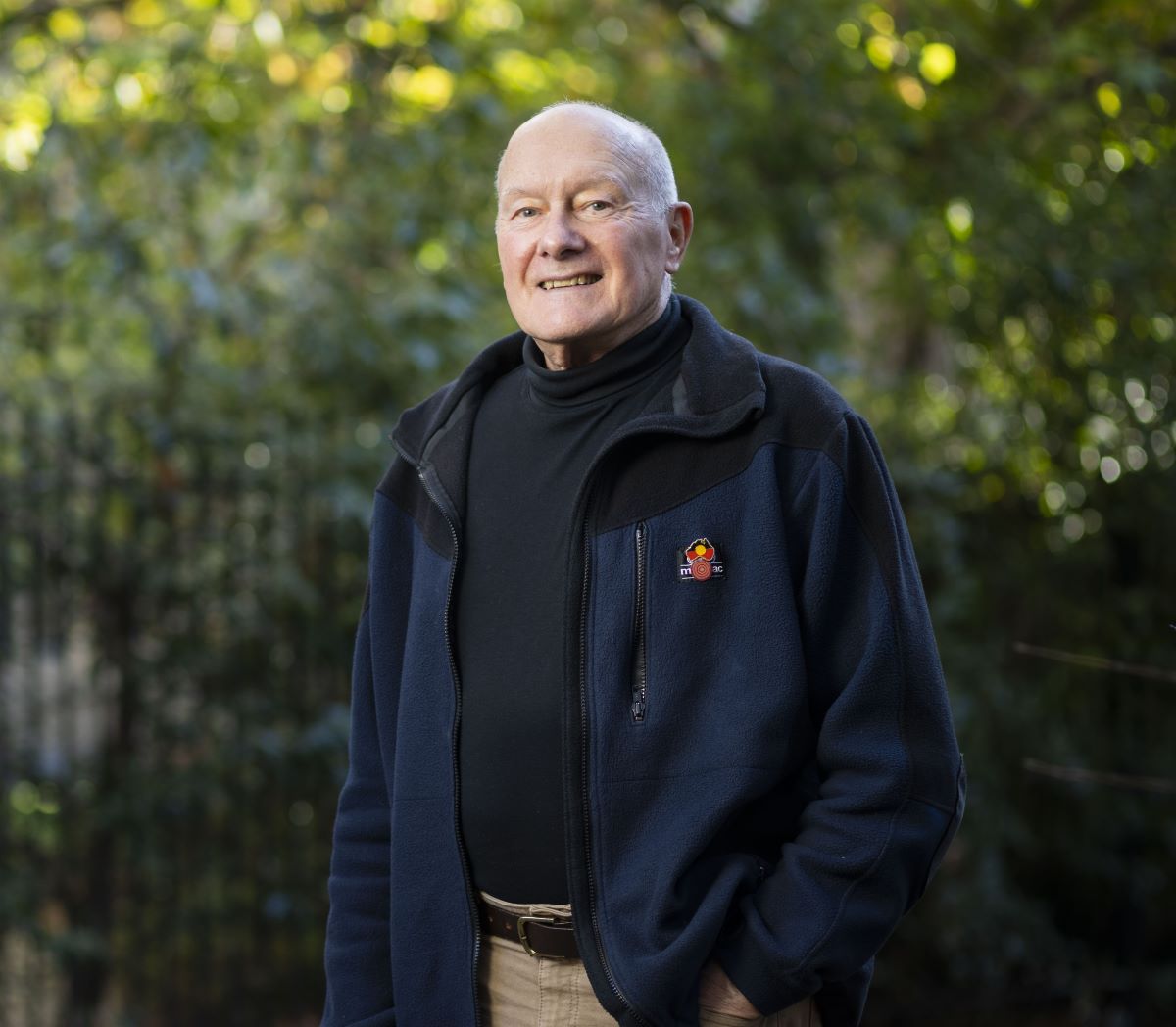
“I really believe there has been some form of divine inspiration that has propelled me along the journey to publication,” says Dr Theo Read.
“The project was essentially immersed in Christianity from the very start,” he says.
“It started at St Mark’s Uniting Church in Mornington, and Kormilda College was jointly run by the Uniting and the Anglican churches.
“I initially resisted going to Kormilda but once I got there and saw the hurdles the Aboriginal students had to overcome, it felt like I was being directed towards doing something by someone pretty powerful.
“I really believe there has been some form of divine inspiration that has propelled me along the journey to publication.”
In 1996, the financial burden involved with the project almost caused a halt to Theo’s dream.
“It was a very costly exercise at that time, but I believed so much in what I was doing,” he says.
Then, from left field, came a financial saviour.
“Out of the blue I got a phone call from someone in Rio Tinto’s Aboriginal relations unit, who were supportive of the work being done at Kormilda College,” Theo says.
The result was Rio Tinto’s decision to support him financially for all of 1997, allowing him to work fulltime on the project and do intensive fieldwork with the Gunbalanya and Walungurru Communities in the Northern Territory and Victoria’s Gunditjmara Community.
Theo is understandably proud of what he has achieved and the fact that the textbooks are now widely used by both indigenous and non-indigenous students.
“I can remember saying to an Aboriginal mentor of mine that it was so important that Aboriginal students had a science book which showed their own culture as being relevant to our world, as is Western science,” he says.
“He pulled me up straight away, though, and said,’ no, these aren’t just for Aboriginal students, they are for non-indigenous students as well’.”
As the textbooks continue to be rolled out to schools around the country, Theo says they serve two distinct purposes within education.
“The textbooks strengthen self-identity, pride and resilience among First Nations students by showcasing their culture and traditional knowledge in an accurate, relevant, sensitive and respectful way,” he says.
“Their content material breaks away from the educational deficit model because First Nations people see their culture and traditional knowledge as being important when positioned alongside Western science.
“They also introduce non-indigenous students to the Aboriginal world view, providing a deeper, richer and more complex concept of this land we now call Australia.”
It might have taken nearly 35 years to get the textbooks published but, as Theo suggests, sometimes the journey is just as important as the destination.
“The more I delved into what I was doing, the more I realised the importance of it,” he says.
“(In the process) many of these Aboriginal people became dear friends, and I was privileged indeed to become an extended family member.”

Comments are closed.