
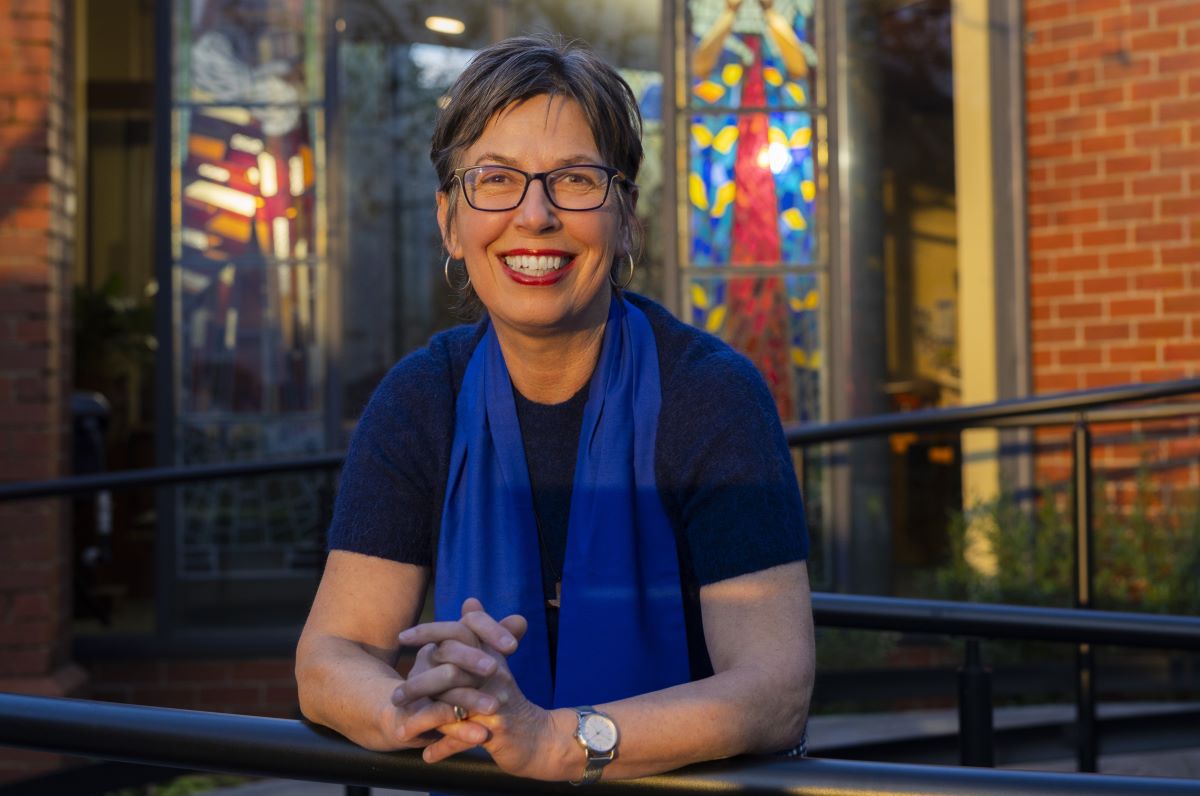
Dr Ros Harris is giving back to the Uniting Church as a lay preacher. Image: Greg Ford
By Andrew Humphries
When Dr Ros Harris first walked into Pilgrim Uniting Church in Yarraville, she felt immediately at home.
Seventeen years later, she feels just as comfortable there, and is giving back to a congregation, and wider Church, that has given her so much.
Ros completed a lay preaching course through Pilgrim Theological College at the end of last year and is now conducting services at a number of churches around Melbourne.
It’s an interesting development, given that for over 30 years she had had nothing to do with religion in any organised form.
As the daughter of regular churchgoers, Ros had remained part of the Methodist Church until she turned 16 in 1977, the year the Methodist Church became part of the Uniting Church in Australia.
As Ros puts it, from that point on she simply stopped attending church, although there was no specific incident which prompted that decision.
“I had this period where I wasn’t a church goer at all and I actually thought to myself, ‘well I don’t believe any of this stuff really’,” she says.
It wasn’t until 2009 that a return to formal worship occurred to Ros, thanks to a chance encounter with a friend’s mother.
“I came to Pilgrim in Yarraville after an invitation from this woman and I immediately felt that this is where I wanted to be,” she says.
“I still wouldn’t have called myself a person of faith at that stage, but I knew that this is where I was being called to be on a Sunday, and I really do think the Spirit was at work.
“I think the turning point for me was that I became involved around that time with the Christian meditation community, and I remain heavily involved with that community.
“It was that experience of meditation, more specifically Christian meditation, that was the tipping point for me because, all of a sudden, I was not trying to think myself into faith. Instead, I was being transformed from the very centre of my being.”
As a 12-year-old within the Methodist Church, Ros was a member of Christian Endeavour, a global and interdenominational youth ministry and discipleship movement.
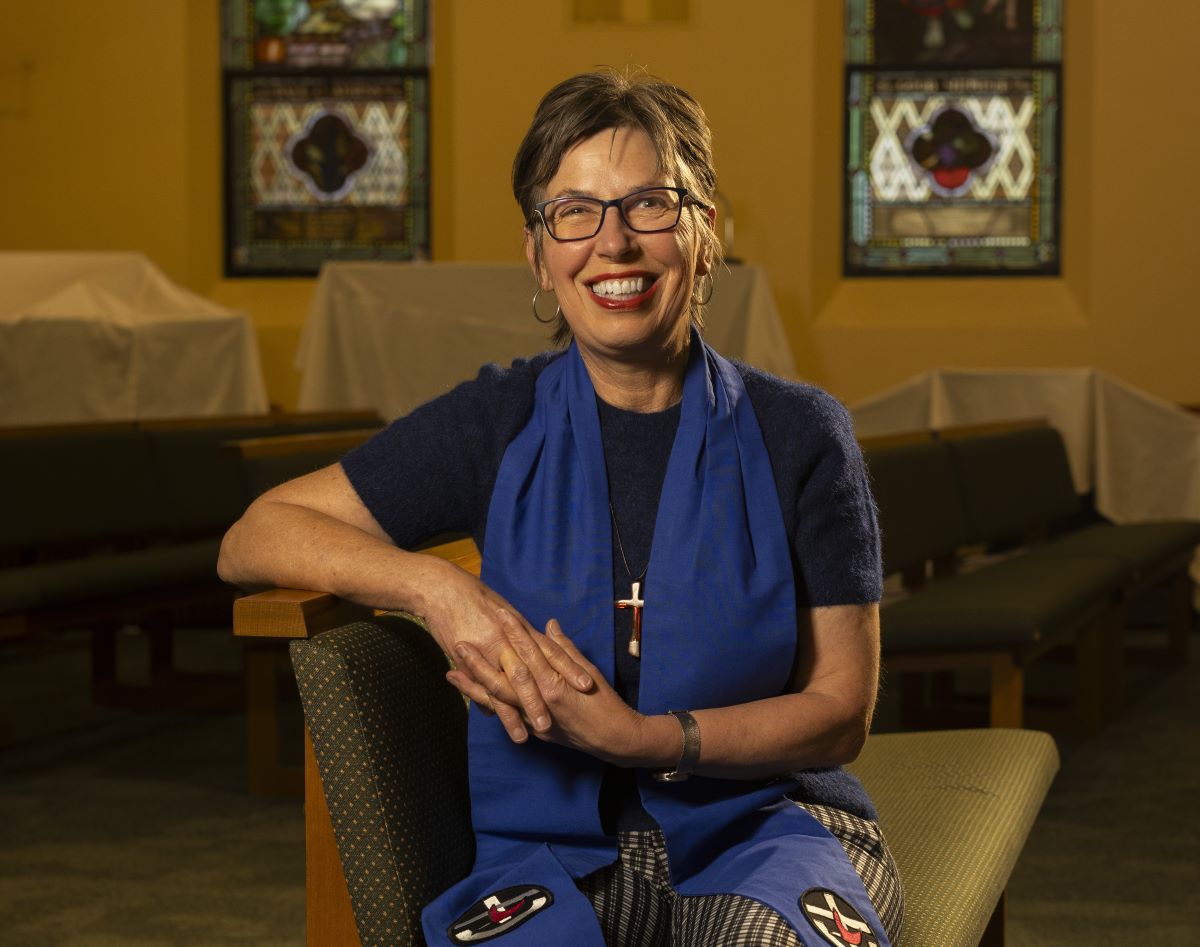
Pilgrim Theological College academic staff played a pivotal role in Ros’s journey to becoming a lay preacher. Image: Greg Ford
“Christian Endeavor in the Methodist Church involved children about 12 or 13 going into groups with a group leader, but it was children rather than the group leader who led liturgy, so I was effectively doing liturgy at the age of 12 without even fully realising it,” she says.
“So I was choosing scripture readings and songs, writing prayers and presenting.
“Clearly, when I was quite young, I was in a position where I was doing essentially what I do now as a lay preacher.”
Her path towards lay preaching began 10 years ago, thanks to encouragement from Pilgrim’s then minister Rev Rachel Kronberger.
In Rachel, Ros says, she had found a wonderful mentor.
“It started when Rachel actually invited me to lead worship,” she says.
“She gave me really good advice and I really loved the prayerful preparation.
“I loved sitting down and having coffee with Rachel, talking about my thoughts and where, you know, God might be calling me. She was incredibly encouraging.”
As Covid-19 hit in 2020, Ros audited two New Testament studies through Pilgrim Theological College, reigniting her lifelong love of learning.
“When I realised you could study to become a lay preacher, I approached Rachel and said this is what I am being called to do,” she says.
Ros was accepted as a lay preaching candidate in 2021 and finished the course last year.
“It was a wonderful experience and the support from Pilgrim Theological College’s academic staff was amazing,” she says.
With a busy life full of commitments, Ros generally preaches in congregations around Melbourne once a month, but also took services at Pilgrim Uniting Church when current minister Rev Alisha Fung was on maternity leave.
“What I look forward to is actually leading worship in other churches because it’s just such a privilege and a joy to walk into another faith community, or another congregation,” she says.
“These people are open to inviting a stranger in, knowing I will share the word of God with them.
“I’ve done it several times and it’s just been an absolute delight.”

“I really do believe that the world does have a deep hunger to hear about the fullness of life that is possible when we follow Jesus Christ,” says lay preacher Dr Ros Harris.
A famous quote from American writer and theologian Frederick Buechner captures perfectly what Ros loves so much about being a lay preacher.
“Frederick said ‘the place God calls you to is the place where your deep gladness and the world’s deep hunger meet’,” she says.
“When I read that quote years ago I just loved it because those words around deep gladness is what I feel around this call to lay preaching.
“I really do believe that the world does have a deep hunger to hear about the fullness of life that is possible when we follow Jesus Christ.
“The world might not always articulate it like that, but I feel that so many of the afflictions of our time are because people cannot access that freedom and joy and fullness of life.
“For me there is a deep gladness to be able to belong to a Church that values the contribution of lay people to sharing the good news, and I’m very much looking forward to sharing it beyond my home congregation with the wider Church.”
For those considering going down the path to lay preaching, Ros has some sound advice.
“I would say listen, and listen deeply,” she says.
“I would also say to go and find some lay preachers and speak to them about it, and that you don’t have to see it as necessarily a stepping stone to ordination.
“The call to lay preaching is a call in, and of, itself.”
As Ros grows into her role as a lay preacher, she relishes the opportunity to share the joy of worship with other members of the Uniting Church.
“I would hope that members I speak to would feel that they’ve had an experience of God in some way and that they have felt the Spirit speak to them,” she says.
“Depending on the congregation and context, I would hope that they’re walking away feeling either comforted or challenged or a mix of both.”

Comments are closed.