
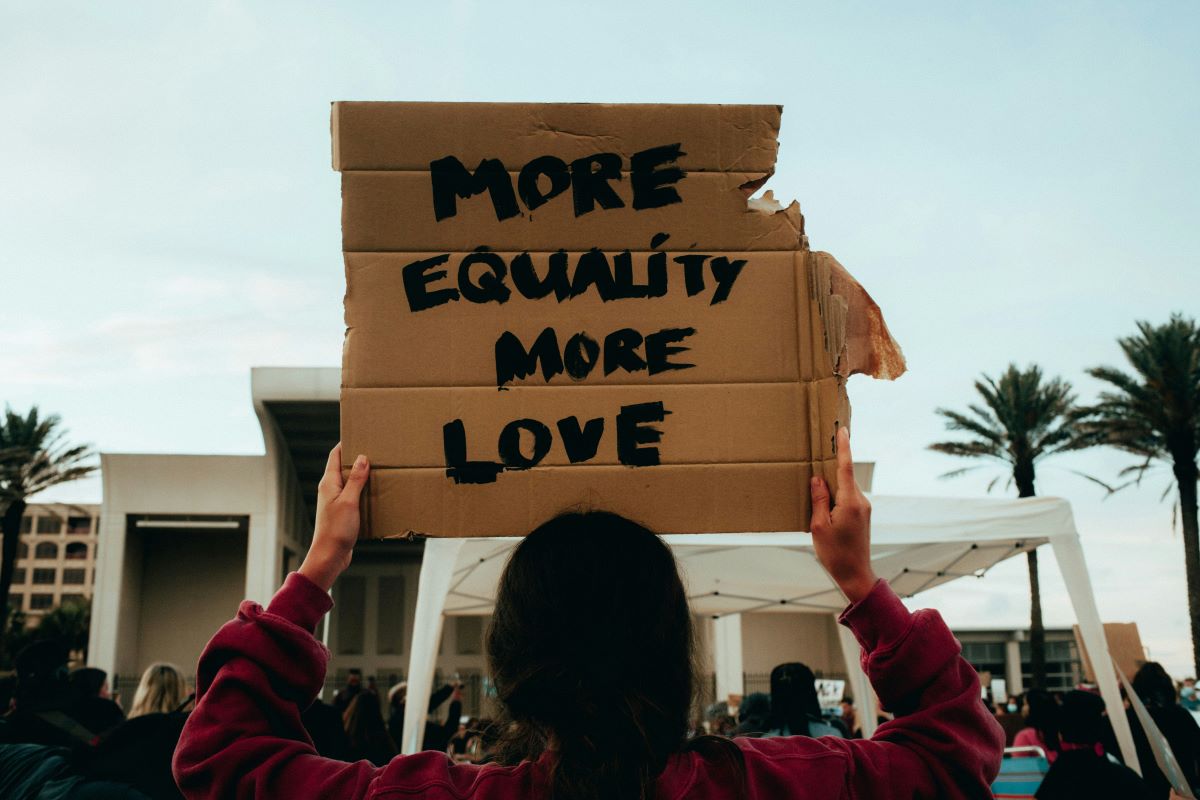
“Our starting point for building a healthier society should be deep listening and curiosity towards understanding each other, which will help build mutual respect and trust,” writes Senior Social Justice Advocate Dr Mark Zirnsak.
By Dr Mark Zirnsak
“If a fellow believer hurts you, go and tell him-work it out between the two of you. If he listens, you’ve made a friend. If he won’t listen, take one or two others along so that the presence of witnesses will keep things honest, and try again.” Matthew 18:15-16
The advice that Jesus gives in Matthew’s Gospel to address conflicts in early Christianity aligns with the advice many negotiators, conflict managers and behavioural psychologists would give today. However, our society is losing the ability to engage in healthy public discourse and conflict, and the churches are not immune.
In their book ‘Conflict Resilience’, Robert Bordone and Joel Salinas point out that conflict is not comfortable, and we often prioritise comfort and feelings of psychological safety over engaging with people with opposing viewpoints. They argue that the benefit of engaging in respectful conflict is long-term trust-building that strengthens our relationships, builds better-functioning organisations, and fosters a healthier society.
Genuine social cohesion is when a society has the collective capacity to engage in respectful conflict in pursuit of the common good. A society that seeks to impose a single view on all its members is oppressive and unhealthy.
Anton Jäger, from the University of Oxford Department of History of Political Thought and Political Theory, argued in his 2023 book ‘Hyperpolitics’ that we have entered an age of both antipolitics and hyperpolitics among parts of our society.
Antipolitics are those who have become so cynical about the democratic system that they see no point in taking it seriously. They are susceptible to voting for any political party or movement that claims to oppose the political establishment. Often, these parties or movements bear the label of being populist. German philosopher Jan-Werner Müller has helpfully defined populist politicians as seeing only the people who vote for them as being the “real” citizens of a country. Further, in a healthy democracy, the opposition party or parties in a parliamentary system seek to hold the government of the day to account for the good of society. In contrast, populist politicians see politics as war by other means and happily seek to destabilise society in the pursuit of power.
Hyperpolitics involves people getting involved in short-term cycles of hype and outrage, often facilitated by the online world. However, with a decentralised and community structure backing short-lived extreme politicisation, it becomes a fruitless stream of outrage with little or no practical lasting consequence. Hyperpolitics further feeds cynicism towards the democratic system which further destabilises and hollows out democratic institutions that would otherwise mediate conflict within the public sphere.
In her latest work, ‘The Common Good Economy’, Professor Mariana Mazzucato offers a positive response to the situation we find ourselves in that churches could align with our theology. She urges the church should reclaim the term “the common good” to replace the more malleable “public interest”. Mazzucato argues that democratic governments need to reshape markets to serve the common good over privatised profits. Further, she argues that to revitalise our democracies, we need to collectively pursue measures that will deliver transparency of government, and accountability for those in government who make decisions and mass participation for ordinary people.
Our starting point for building a healthier society should be deep listening and curiosity towards understanding each other, which will help build mutual respect and trust.
Dr Mark Zirnsak is the Synod’s Senior Social Justice Advocate

Comments are closed.