
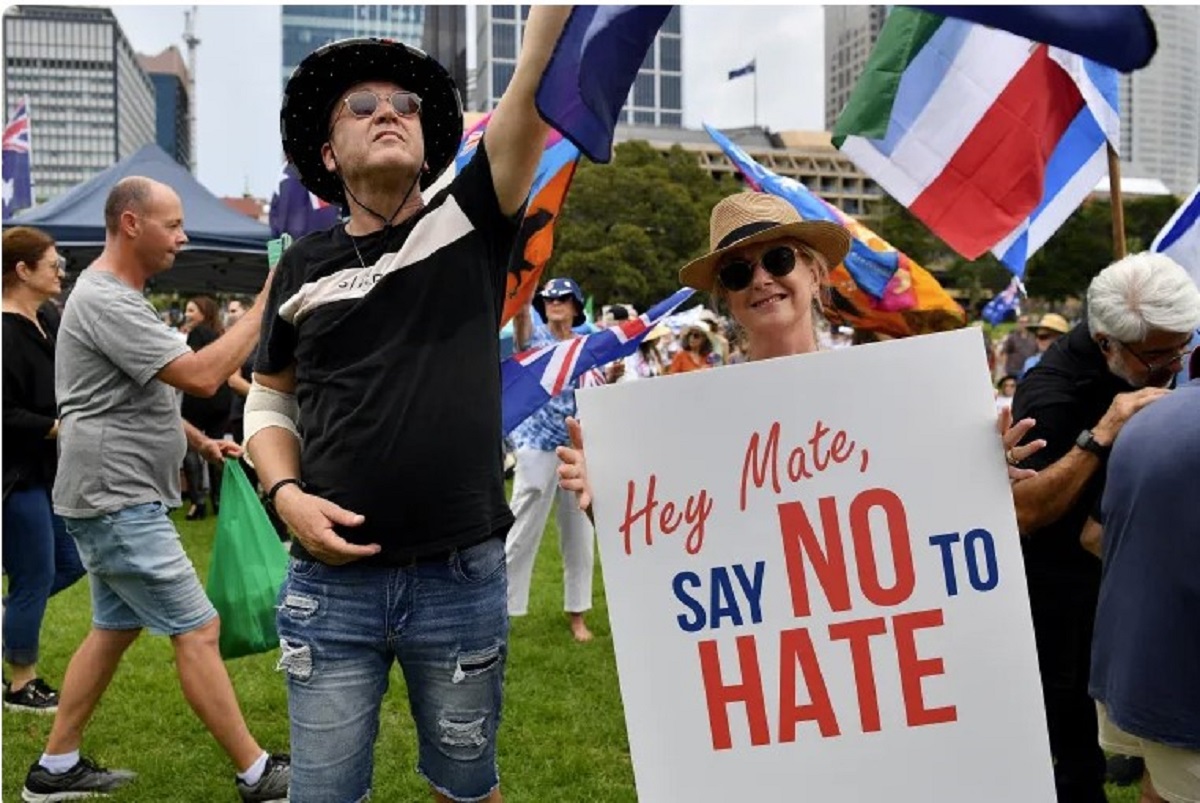
The Victorian Government is inviting comment on proposed legislation to ban public protest at places of worship.
By Marina Williams
As Victoria seeks public consultation on new laws to restrict protests near places of worship, there’s concern about impacts on civil liberties, religious safety, and social cohesion.
Premier Jacinta Allan announced the proposed legislation in December 2024, citing a rise in “antisemitic incidents”, including the bombing of the Adass Israel Synagogue in Ripponlea, and a growing sense of hostility surrounding some places of prayer.
The Government says the proposed reforms aim at stamping out the influence of extremist and radical conduct at public protests, protecting the safety of people of all faiths attending religious worship, and helping restore social cohesion.
The final form of any legislation has not been determined, with consultation ongoing.
The proposed measures could include creating safe access areas around places of religious worship, or amending existing laws, to protect against disturbance of religious gatherings. The size and scope of any restricted zones remain under consultation.
Synod Senior Social Justice Advocate, Mark Zirnsak, says the Church has not yet taken a formal stance but supports wide consultation.
“Hostile protests at places of worship are rare,” Mark says, “but harassment that causes psychological harm should be taken seriously.”
He questions whether new legislation is needed.
“We need to evaluate whether existing laws are already adequate to deal with harmful protests,” Mark says.
“Just because a law exists doesn’t mean police can make effective use of that law in practice. We need to consider whether current laws adequately address harmful protests.
“At the same time, conversations with Uniting Church congregations that have been targeted by protests that have harassed and intimidated their members and staff indicate such congregations oppose the need for new laws.”
Jacinta Allan says the Government’s aim is to balance the right to protest with the right to live, work and pray freely without fear or harassment.
“Antisemitism thrives in extreme and radical environments, and we are giving police more powers to control protest and make it harder for agents of violence and hate to hide,” she said when announcing the proposed reforms.
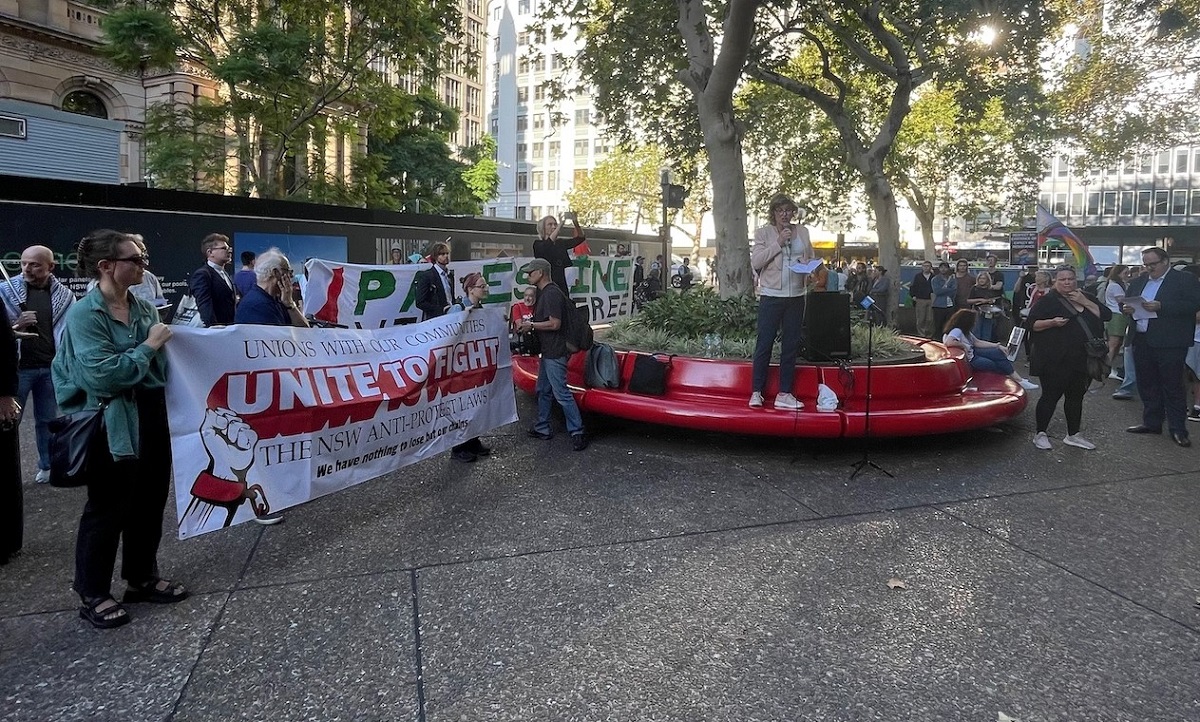
Rev Dr Josephine Inkpin addresses a rally against New South Wales legislation aimed at preventing forms of protest.
While consultation with religious and community leaders, police, unions, and the Human Rights Commission is ongoing to refine the reforms, Victoria is not the first state to consider legislative change.
In February, New South Wales passed new laws aimed at restricting the right to protest.
Police were given additional powers to move on protesters near places of worship and to penalise harassment or intimidation of worshippers with up to two years’ jail.
The Victorian proposal has drawn a diverse set of perspectives, reflecting the complex intersections of religion, politics and public life in the multicultural state.
Questions of protection and persecution are being weighed against rights to assembly and protest, with both sides pointing to lived experience.
Any reform, Mark says, must balance protection with the right to peaceful assembly and be fair across communities.
“It’s important we consider the impact on all faith groups. However, at this stage the Government has failed to make the case as to why existing laws are inadequate to protect people of faith from protesters seeking to intimidate and harass them,” he says.
In an open letter to the Premier in March, 22 civil society, faith, legal, First Nations, disability rights, and migrant groups expressed “deep concern with the proposed reforms and how they interact with the Victorian Charter of Human Rights”.
“Violence and racist attacks are not protests … they are crimes,” they wrote.
The groups included Liberty Victoria, Jewish Council Australia, Quakers Victoria, Muslim Legal Network, Amnesty International and the Victorian Aboriginal Legal Service.
“There is no credible correlation between recent criminal acts and the exercise of the right to protest,” the letter stated.
“Restricting the right to protest would not have prevented the abhorrent crimes seen in recent months.”
Others within the faith community, though, are urging legislative action in response to direct threats.
CEO of the Jewish Community Council of Victoria, Naomi Levin, supports the proposed reforms as necessary protection for communities under threat.
“In 2023, a large and intimidating group of protesters gathered outside a suburban Melbourne synagogue, forcing worshippers to evacuate,” she says.
“In 2024, a different synagogue was targeted, with a large police presence required to de-escalate the situation.”

Jewish Community Council of Victoria CEO Naomi Levin supports much of the proposed legislation as necessary protection for some communities.
Naomi notes that many synagogues have already implemented substantial security measures.
“All Victorians must be able to attend a place of worship without fears for their safety,” she says.
“We welcome any initiatives that protect the right of all Victorians to freely and safely access places of worship and will work with parliamentarians to progress new laws.”
While most debate centres on high-profile incidents, smaller faith communities also share concerns on whether changes to laws would benefit.
For Ruth and John Wishart, members of Sunrise Beach Uniting Church in Queensland, what began as an environmental objection to a proposed UnitingCare aged care facility became a protracted, personal campaign of disruption despite the congregation’s lack of involvement in the targeted project.
“It was a very stressful time,” Ruth recalls. “You’d drive to church on Sunday and not know what you’d find.
“Protesters would be holding signs, blocking cars, ringing bells – even on Christmas morning they were there with paper feathers symbolising death to the environment.
“They weren’t looking for meaningful conversation, they were trying to shame us publicly.”
Adds John: “They removed survey pegs, blocked roads, filmed us constantly, and twisted things on social media.”
Although worship wasn’t formally disrupted, congregational life was, particularly during morning tea, when protesters targeted vulnerable attendees.
Leaders protected members by defusing interactions, with some parishioners avoiding services during heightened activity
“What helped most was the implementation of the council laws that said, this is what this land is being designated for,” Ruth says.
“What really helped was support from our Synod and local council, who stuck to the facts.”
At Pitt Street Uniting Church in Sydney, protest is embedded in ministry.
The congregation has long engaged in social justice activism, from Mardi Gras marches to anti-nuclear and climate rallies.
“Pitt Street’s strong support for queer communities has made us the target for protests,” says member Warren Talbot, recalling a 2023 World Pride event where rainbow-painted steps were vandalised and a banner supporting LGBTIQ+ Christians was stolen. “Police took the matter very seriously, treating it not only as vandalism but a hate crime.”
Still, the church remains committed to peaceful public witness.
“Pitt Street is likely to be cautious about any laws which might restrict the right to peaceful protest,” Warren says.
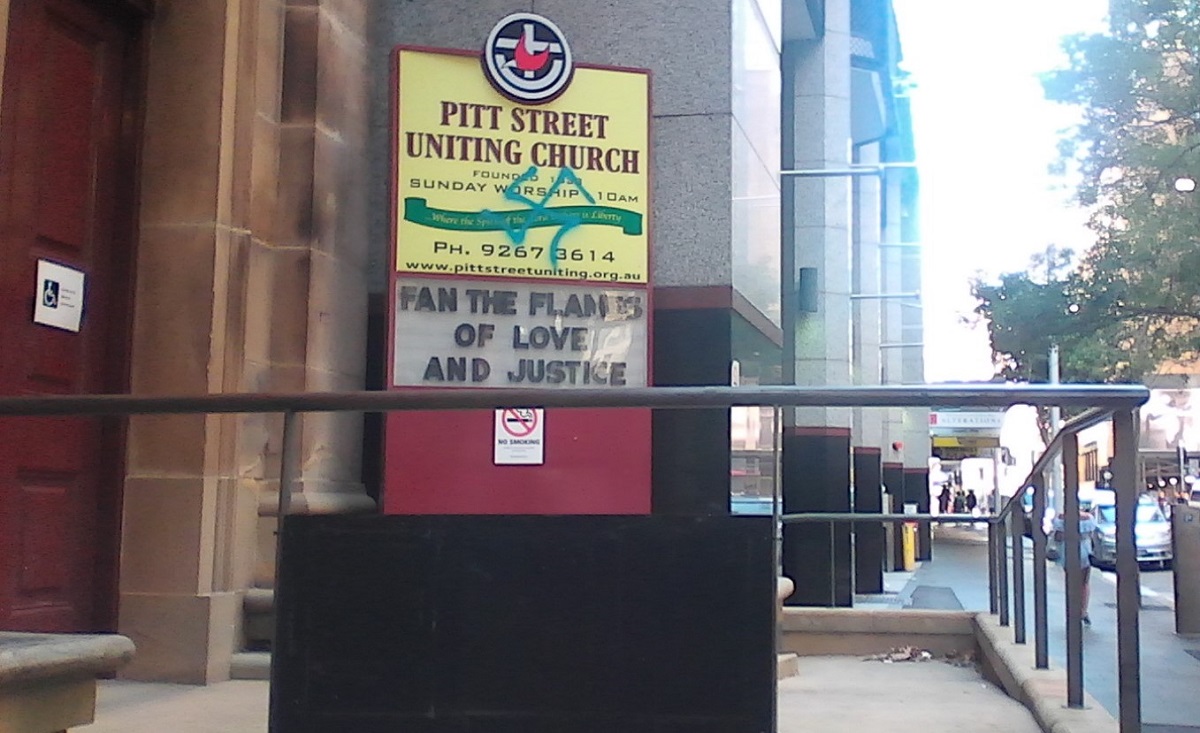
A swastika painted on the Pitt Street Uniting Church sign in Sydney.
Former Pitt Street Minister Rev Dr Josephine Inkpin delivered a strong critique of the New South Wales law at a Sydney rally in February.
She warned against using religious protection to suppress dissent, calling the Bill’s language dangerously vague.
“(It’s) ill-defined and broad, including words such as ‘impede’, ‘hinder’ and ‘harass’ and has sweeping provisions, including increased police powers to limit legitimate democratic expression, not at specific sites but simply ‘near’ to ‘places of worship’, which are not defined,” she says.
Josephine, a transgender Anglican priest serving with the Uniting Church and co-chair of Equal Voices, a national network of LGBTIQA+ Christians and allies, believes such laws could silence abuse survivors and marginalised communities.
“They safeguard powerful interests and assume that religious spaces should be privatised places,” she says.
“If the Uniting Church stays true to its roots, it must actively oppose such overreach.”
While the proposed Victorian legislation could be very different to the new laws in New South Wales, civil liberties organisations warn that any restrictions could risk overreach and may suppress legitimate dissent.
Amnesty International Australia has described the New South Wales crackdown on protest as a “band-aid response to a surge of antisemitism and other racism”.
“Criminalising peaceful protest is not a solution to tackling antisemitism, Islamophobia and racism – it is a dangerous suppression of people’s human rights,” says Amnesty International Australia Strategic Campaigner, Nikita White.
“Restricting fundamental human rights, such as the right to peaceful protest, will not address the root causes of hate.”
Says Human Rights Legal Centre’s Legal Director, Sarah Schwartz: “Peaceful assemblies outside places of worship are an important tool for communities to hold their institutions to account, such as protests by survivors of clergy abuse. Expanding police powers and restricting protest will only create more division by silencing the voices of people peacefully speaking out. You cannot arrest your way to tolerance.”
The Australian Religious Response to Climate Change, a multi-faith network, also expressed concern at the New South Wales laws.
“We believe restrictions on the right to protest should be kept to a minimum because of the importance of public protest actions for helping create a more ethical, just, peaceful and environmentally safe society,” signatories wrote on the group’s website.
As consultation continues on whether new laws are needed to protect the safety of religious worship for Victorians of any faith, opinions are likely to remain divided.
While some consider it a solution, others see potential overreach.
The real solution lies in response, not restriction, says Ruth.
“Laws alone won’t stop conflict. What matters is how we respond – with hospitality, calm, and courage,” she says.
Josephine warns the price of overreach is democratic erosion.
“Suppressing freedom of speech does not solve the underlying issues and typically leads to deeper frustrations and more costly consequences,” she says.
Mark says the Government and Victoria Police need to provide evidence that existing laws are inadequate.
“We must protect religious communities from unacceptable harm, while upholding the democratic right to protest,” he says.
“It’s not either-or – it’s about balance and respect.”
The Islamic Council of Victoria was invited to contribute to this article but declined.

Comments are closed.